Introduction to Solar Flares
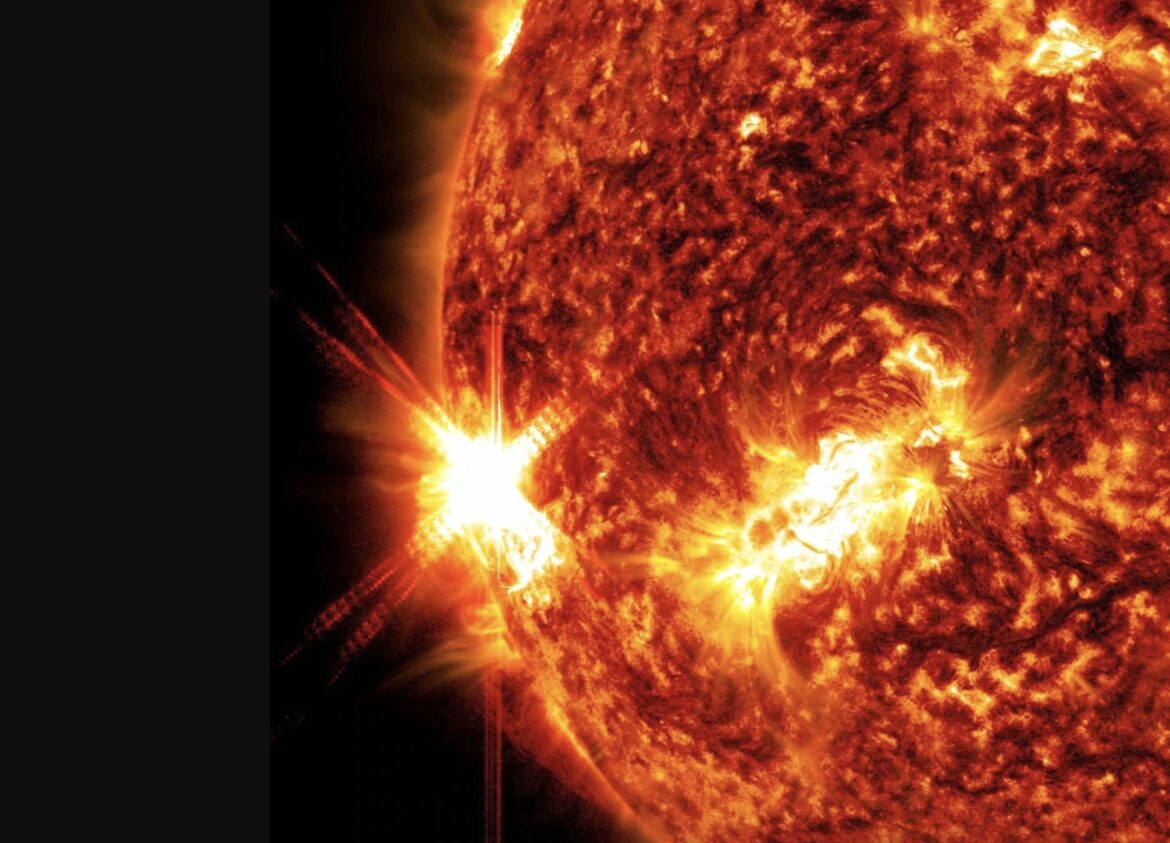
Solar flares are intense bursts of radiation coming from the release of magnetic energy associated with sunspots. These phenomenon are crucial to understand as they can have significant effects on space weather, impacting satellite communications, GPS systems, and even power grids on Earth.
What Are Solar Flares?
Solar flares are categorized into three types based on their intensity: X-class (the most powerful), M-class (medium intensity), and C-class (the least powerful). The flares are classified according to their X-ray brightness in the wavelength range of 1 to 8 Angstroms. The Sun emits these flares as a result of complex interactions in its magnetic field, particularly around sunspots where magnetic energy is concentrated.
Recent Solar Activity
In recent months, solar activity has intensified, leading to multiple flare events, including several powerful X-class flares recorded in October 2023. These flares have generated increased interest among scientists and researchers who are studying the implications of such phenomena. The National Oceanic and Atmospheric Administration (NOAA) has provided updates on how these solar events can affect Earth, including potential disruptions to communication systems and power supplies.
Effects on Earth and Technology
When solar flares occur, they can release a barrage of high-energy particles that travel at significant speeds towards Earth. These particles can interact with the Earth’s magnetic field, causing geomagnetic storms. Such storms can lead to Aurora Borealis phenomena, brighten night skies near the poles, but also lead to issues like satellite damage, errors in navigation systems, and grid failures. In extreme cases, the impact can be similar to that of a Carrington Event, which, in 1859, caused widespread disruption to telegraph systems.
Conclusion
The significance of solar flares extends beyond mere scientific interest; they are a crucial aspect of space weather that can impact modern technological infrastructure. As we advance in our understanding of solar flares, forecasting their occurrences and potential impacts becomes increasingly critical. This knowledge not only helps mitigate risks to technology but also enriches our understanding of the Sun itself and its influence on the solar system. With growing investment in space weather research, scientists aim to improve predictions and develop actionable responses to safeguard our technologies against the effects of these powerful solar phenomena.