The Significance of the 2026 Solar Eclipse
The upcoming solar eclipse on 12 August 2026 is an eagerly awaited astronomical event that will capture the attention of millions around the globe. Solar eclipses, a phenomenon where the Moon passes between the Earth and the Sun, can offer a breathtaking spectacle. Eclipses hold great significance for both astronomy enthusiasts and the general public, as they provide a unique opportunity to witness the engrossing dynamics of our solar system.
Path of the Eclipse
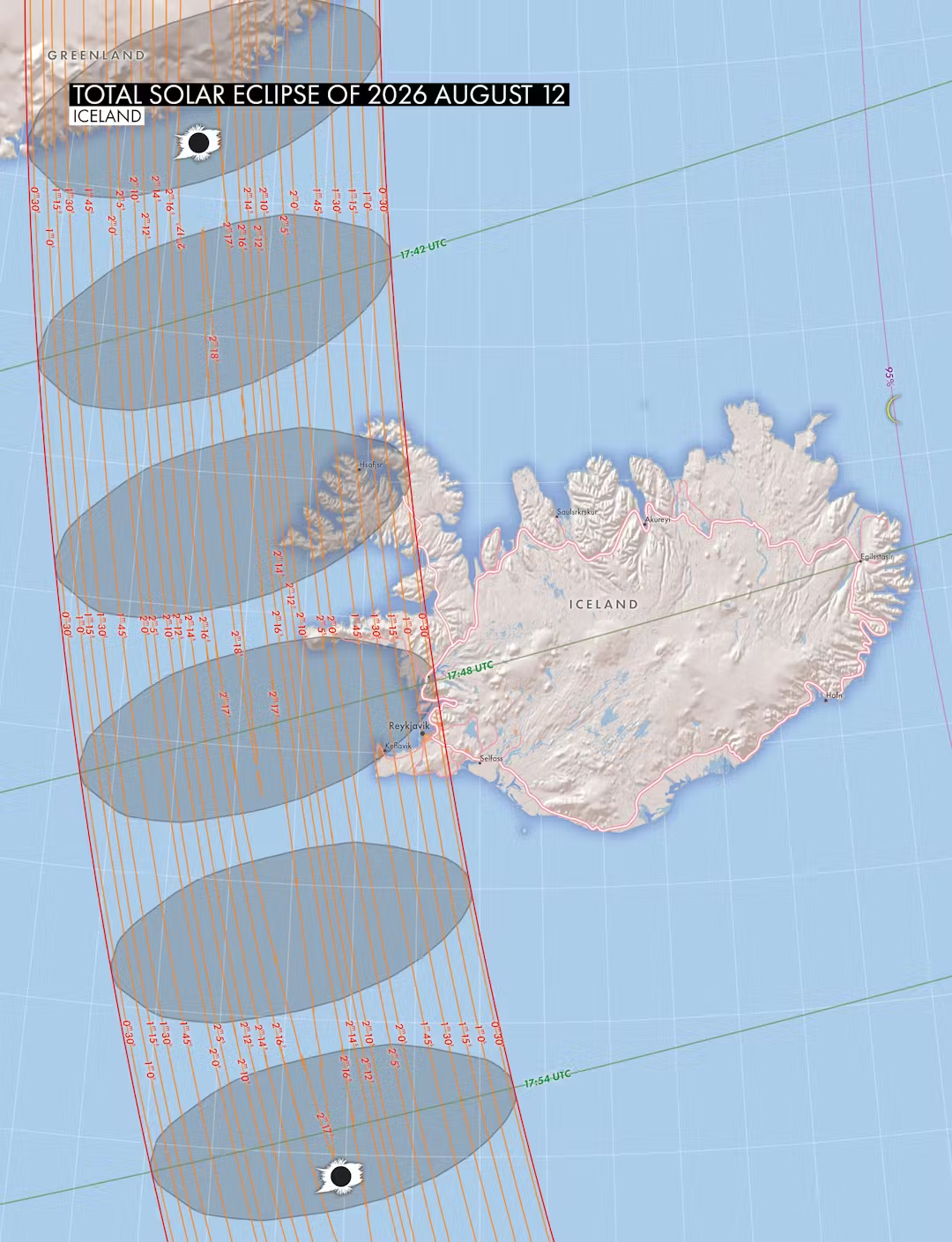
This particular eclipse will follow a path that spans parts of the Arctic, Greenland, Iceland, Spain, and Portugal, rendering it highly accessible to observers across Europe. In these regions, viewers will be treated to a total eclipse, where the Sun is completely obscured by the Moon for a brief period, plunging the area into twilight. Outside the path of totality, those in nearby areas will experience a partial eclipse, where the Moon covers only a portion of the Sun.
Upcoming Viewing Events and Preparations
As the date approaches, various events and gatherings are being planned, particularly in cities along the path of totality. Here, astronomers and enthusiasts alike will come together for watching parties and educational sessions, alongside activities to enrich the experience of attendees. Local astronomers and organisations will also provide telescopes fitted with solar filters for safe viewing. It’s essential for individuals wishing to view this eclipse to equip themselves with proper eye protection, as looking directly at the Sun can cause serious eye damage.
The Science Behind Solar Eclipses
Solar eclipses are not only awe-inspiring; they also provide unique opportunities for scientific research. During a total solar eclipse, the Moon blocks the Sun’s light, allowing scientists to study the solar corona, the outer atmosphere of the Sun, which is usually hidden by the bright light of the Sun’s surface. This invaluable data aids in understanding solar behaviour, which can impact satellite communications and climate.
Conclusion and Future Expectations
As we approach the 2026 solar eclipse, anticipation is building within both the scientific community and popular culture. At a time when interest in astronomy continues to rise, events such as this eclipse remind us of the shared experience and wonder of our universe’s natural phenomena. For those wishing to witness this splendid event, planning ahead for safe viewing strategies will ensure the experience is memorable and enjoyable. Mark your calendars for 12 August 2026 and prepare for an extraordinary encounter with our solar system!