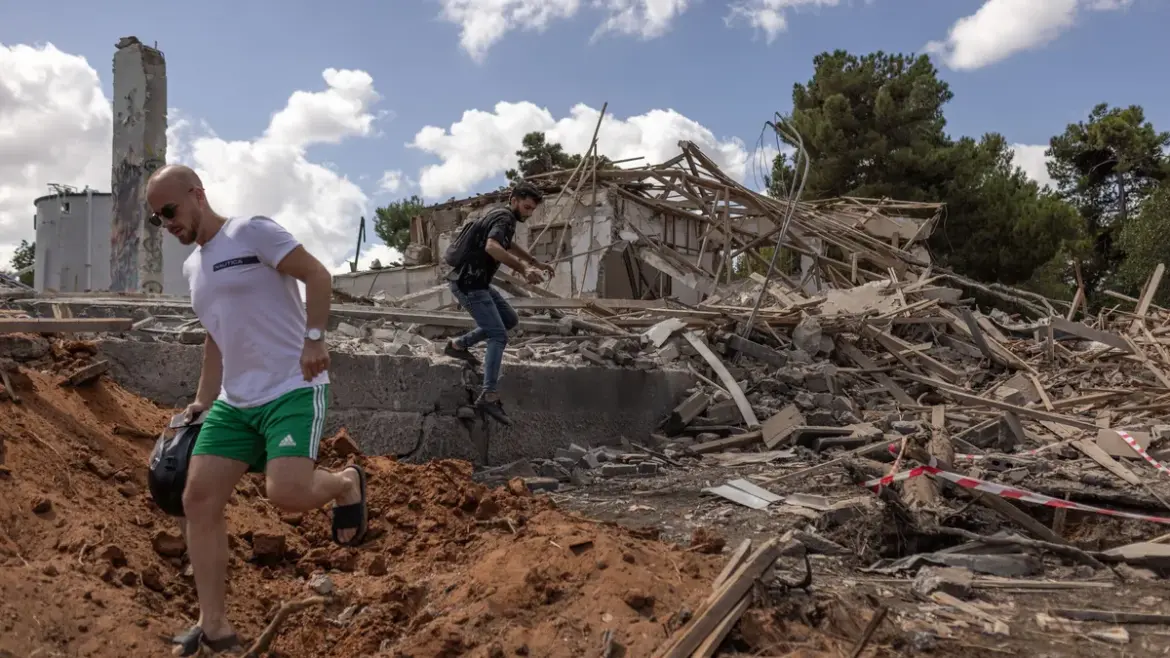
Breaking Development in Dubai Amid Israel-Iran War
On March 7, 2026, the ongoing conflict between Israel and Iran has begun to significantly impact Dubai, raising concerns among investors and affecting travel operations. The war has led to widespread flight cancellations and uncertainty in the real estate market, prompting discussions about the future of property investments in the city.
Immediate Circumstances and Impact on Travel
Several airlines, including IndiGo, Air India, and Emirates, have canceled flights due to the escalating conflict. The UAE’s Defence Ministry reported intercepting incoming missile and drone threats from Iran, which have also been detected over Saudi Arabia and Qatar. Emirates flights to and from Dubai were suspended and then partially resumed as security threats persisted, further complicating travel plans for many.
Real Estate Market Reactions
The Israel-Iran conflict has sparked discussions among investors in Dubai’s off-plan housing projects. Real estate experts predict a potential short-term fall in property prices by 30-40%, as geopolitical uncertainty looms. Investors are expressing fears of delays and a slower resale market, with Indian nationals accounting for roughly 20-22% of foreign property purchases in Dubai, raising concerns about their investment security.
Broader Context of Geopolitical Tensions
This conflict is not occurring in isolation; it is part of a broader pattern of instability in the region that has historically affected markets. While global conflicts often lead to wider market corrections, some experts believe that regional instability has sometimes redirected capital into Dubai rather than away from it. Dubai’s position as a global financial hub provides structural support to its real estate sector, which could help mitigate the impact of these tensions.
Expert Opinions on Market Resilience
Real estate experts have noted that smaller units may prove more resilient during uncertain periods, suggesting that while the market may experience a downturn, it could be temporary if geopolitical stability returns. Prashant Thakur, Executive Director of ANAROCK Group, stated, “The current geopolitical tensions will undoubtedly introduce a degree of caution among investors.” Meanwhile, Sahil Verma, COO of Shray Projects, commented, “While global conflicts often lead to wider market corrections, regional instability has sometimes redirected capital into Dubai rather than away from it.”
Investor Sentiments and Concerns
As the situation unfolds, investor sentiments are mixed. One Reddit user expressed concern, asking, “Do you think all my investments are going to be zero? Will anyone be renting out the townhouses?” Another user reassured, “Your investments will not be zero, but do not expect a flipping profit until the market recovers.” These sentiments reflect the anxiety surrounding the current geopolitical climate and its potential long-term effects.
Looking Ahead
Details remain unconfirmed regarding the exact duration of the geopolitical tensions and their long-term impact on Dubai’s real estate market. As the situation develops, stakeholders in the region will be closely monitoring the effects on both the travel and real estate sectors, hoping for a return to stability.