“I did not know if Chief Minister Mamata Banerjee was ‘angry’ with her.”
These words from Droupadi Murmu, India’s first tribal President, encapsulated the tension surrounding her recent visit to Santiniketan for the International Santhal Conference. Speaking at Visva-Bharati University on March 7, 2026, Murmu expressed her disappointment over the absence of West Bengal’s Chief Minister and other senior ministers during the event, highlighting the importance of political representation at such significant cultural gatherings.
The International Santhal Conference, a platform aimed at celebrating and discussing the rich heritage of the Santhal community, faced a last-minute venue change due to a lack of permissions. This shift not only raised questions about the organizational aspects of the event but also underscored the challenges faced by cultural initiatives in the region.
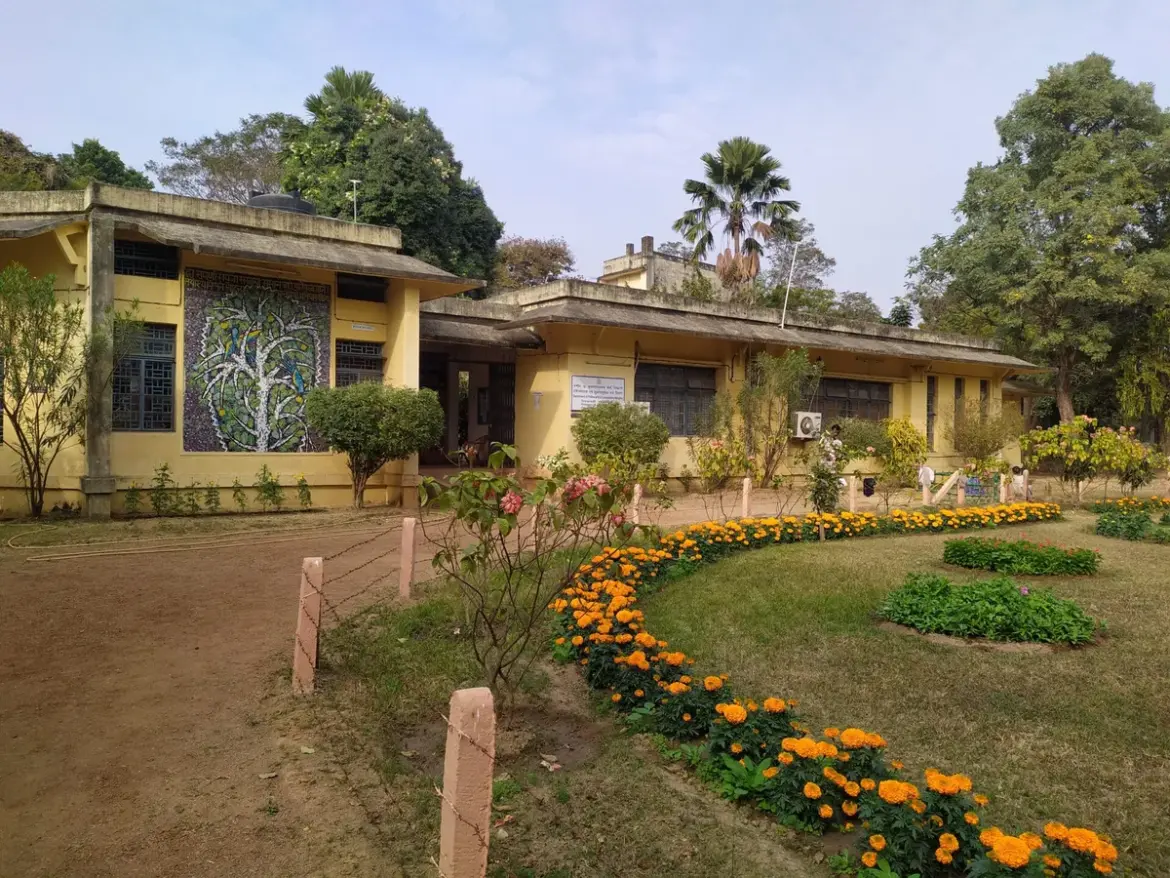
Murmu’s remarks came against the backdrop of a vibrant artistic legacy associated with Santiniketan, particularly the works of Nandalal Bose, a prominent figure in Indian art history. Bose’s philosophy centered on making art accessible to all, believing it should be as common as the air we breathe. His visual narratives aimed to decolonize the Indian mind, a vision that resonates with the themes of the Santhal Conference.
In conjunction with the conference, an exhibition titled “Colours of Swades” is set to showcase Bose’s works, employing Artificial Intelligence to reinterpret his iconic pieces. Nidhi Choudhari, a curator of the exhibition, remarked, “Technology is a tool of interpretation. It helps visitors step closer into the world Bose imagined.” This innovative approach aims to engage a new generation with Bose’s artistic legacy, which includes the creation of 77 posters depicting the life of the soil for the masses during a political gathering in Haripura, Gujarat in 1938.
The Haripura panels, which will be on display at the National Gallery of Modern Art from March 9 to April 9, serve as a testament to Bose’s enduring influence on Indian art and culture. Choudhari noted, “The Haripura panels were never intended to be museum objects in the conventional sense,” emphasizing their role as dynamic cultural artifacts rather than static displays.
As Murmu’s visit concluded, her comments on political protocol resonated with many. She stated, “Protocol is not a matter of political convenience. It reflects respect for constitutional offices,” a sentiment that underscores the significance of political engagement in cultural discourse.
The International Santhal Conference and the accompanying exhibition reflect a broader commitment to celebrating and preserving the cultural heritage of the Santhal community while also honoring the artistic contributions of figures like Nandalal Bose. As Santiniketan continues to be a focal point for such discussions, the expectations for future events remain high, with hopes for greater political support and engagement in the cultural sphere.