Did Michael Vaughan’s Critique Reflect a Larger Issue in T20 Cricket?
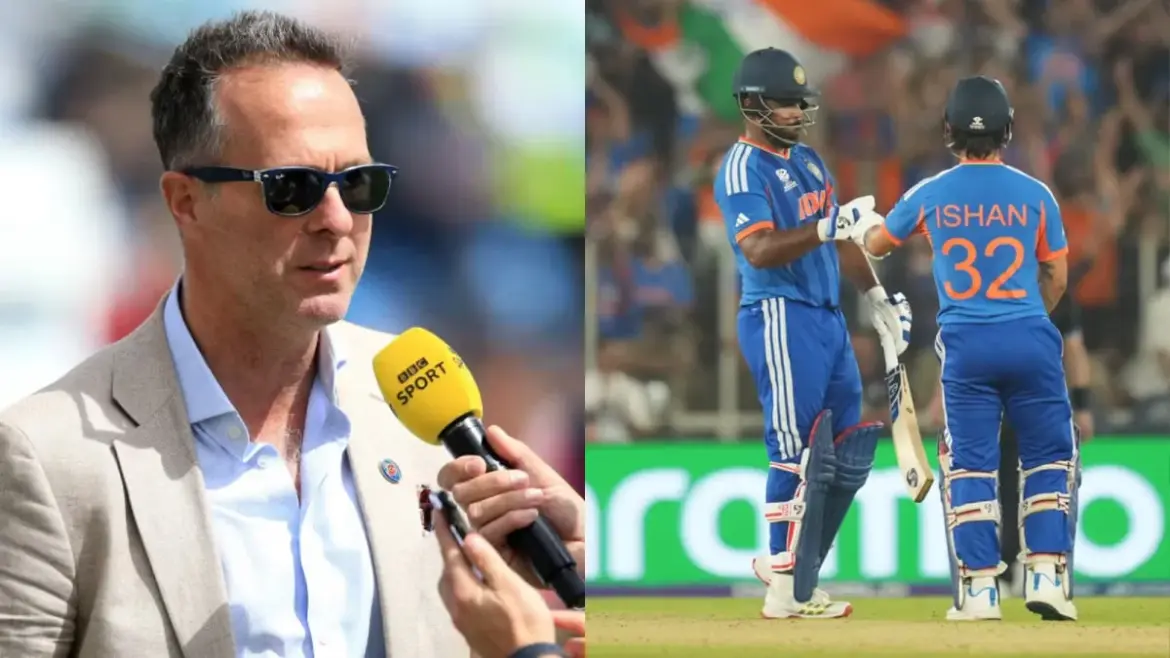
In the aftermath of the T20 World Cup final held on March 8, 2026, at the Narendra Modi Stadium in Ahmedabad, a critical question arises: Is there a persistent imbalance between bat and ball in T20 cricket? Michael Vaughan, former England captain and cricket analyst, voiced his concerns during the match, stating, “This isn’t fair balance between Bat & Ball .. #ICCT20WorldCupfinal.” His remarks have sparked discussions about the nature of T20 cricket and its evolving dynamics.
India’s performance in the final was remarkable, scoring a total of 255 runs for the loss of 5 wickets. This impressive total was bolstered by standout performances from players like Sanju Samson, who scored a half-century with an astonishing eight sixes and five fours, and Abhishek Sharma, who contributed 52 runs off just 21 balls. India’s Powerplay score of 92 runs without losing a wicket marked the highest ever in a T20 World Cup match, showcasing their dominance in the early stages of the game.
Despite the thrilling spectacle, Vaughan’s critique highlights a growing concern among cricket analysts regarding the balance of play in T20 matches. His previous criticisms have often focused on how the game has tilted in favor of batsmen, leading to high-scoring matches that may detract from the traditional challenges bowlers face. This sentiment was echoed by other cricketing figures, including Kevin Pietersen, who remarked, “Best team won the tournament! Best team by a mile too!”
Adding to the narrative, Dinesh Karthik, known for his pre-match rituals, expressed excitement before the game, saying, “Expect some firecrackers.” Karthik’s ritual of pressing his shirt before important matches has been associated with India’s victories in multiple tournaments since 2024, further emphasizing the psychological aspects of performance in high-stakes games.
As the dust settles on this year’s T20 World Cup, Vaughan’s comments serve as a reminder of the ongoing debates surrounding the format. With India emerging victorious and Vaughan congratulating them on being the best side in the tournament, the focus now shifts to how the game will adapt. Will cricket authorities consider adjustments to maintain a competitive balance, or will the trend of high-scoring matches continue to dominate?
Details remain unconfirmed regarding any potential changes to the rules or formats in response to these critiques. However, the conversation surrounding the balance between bat and ball is likely to persist as teams prepare for future competitions. The cricketing community will be watching closely to see how these discussions influence the game moving forward.
In summary, Michael Vaughan’s critique of the T20 World Cup final encapsulates a broader dialogue about the future of T20 cricket. As India celebrates its victory, the implications of Vaughan’s observations could shape the landscape of the sport in the years to come.