Key moments
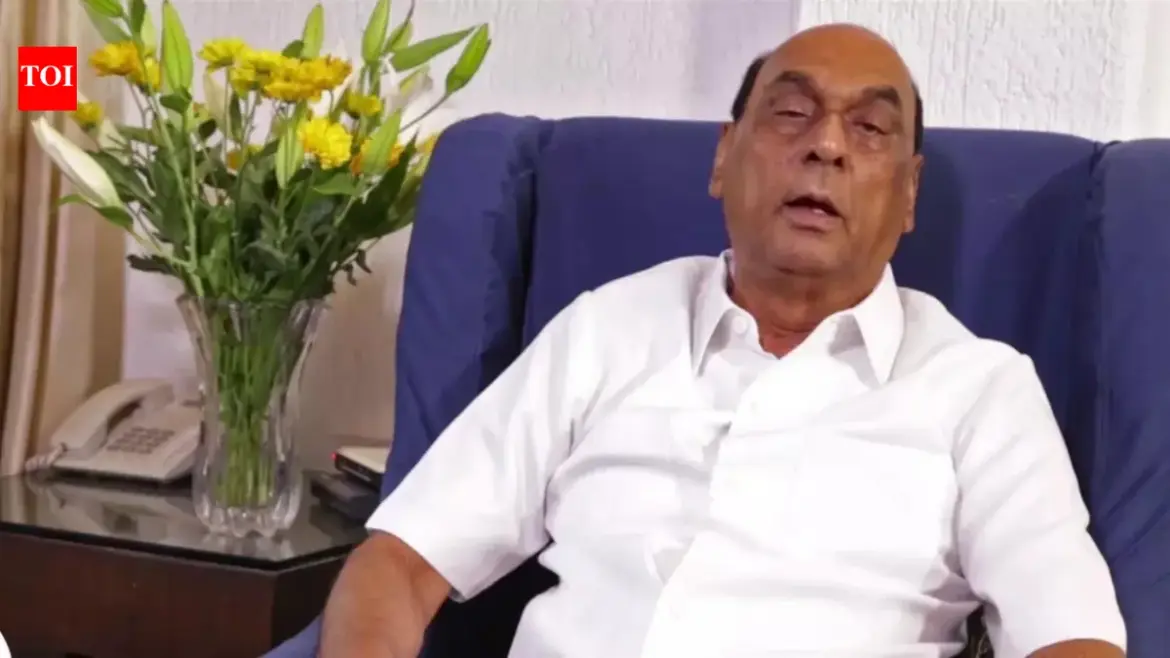
Datta Meghe, a veteran leader of the Bharatiya Janata Party (BJP) and a significant figure in Indian politics, passed away at the age of 89. His death marks a profound loss for Vidarbha, a region in Maharashtra, where he had a lasting impact on both the political and social spheres.
Meghe’s political career spanned several decades, during which he served four terms in the Lok Sabha and was a member of the Rajya Sabha from 2002 to 2008. His political journey began with the Nationalist Congress Party (NCP), which he joined upon its formation in 1999. In 2014, he made a pivotal shift to the BJP, further solidifying his influence in the region.
Throughout his career, Meghe was known for his dedication to improving education and healthcare in Vidarbha. He established numerous educational institutions aimed at providing higher education opportunities to the youth of the region. His commitment extended to healthcare, where he provided free medical treatment to the underprivileged in Sawangi Meghe, demonstrating his belief in accessible healthcare for all.
In the wake of his passing, Nitin Gadkari, a prominent BJP leader, expressed his sorrow, referring to Meghe as an elder brother and lamenting the loss as heart-breaking. Gadkari stated, “With Dattabhau’s passing, the political and social spheres of Vidarbha have suffered a great loss,” highlighting the void left by Meghe’s departure.
Meghe’s contributions to Vidarbha were not just political; they were deeply rooted in social welfare. His initiatives in education and healthcare have left a legacy that will be difficult to replicate. Gadkari further remarked, “Such a leader with a generous heart, broad and pure mind, will not come again,” underscoring the unique qualities that defined Meghe’s leadership.
The impact of Meghe’s death is expected to resonate beyond personal grief, potentially affecting cross-party coordination and dispute resolution in the region. His ability to bridge divides among various political factions was a hallmark of his leadership, and his absence may slow collaborative efforts moving forward.
Meghe is survived by his wife, two sons, two daughters, and grandchildren, who are left to navigate the loss of a patriarch who played a pivotal role in their lives and the community. As tributes pour in, many reflect on his significant contributions and the enduring legacy he leaves behind.
As the region mourns, the future of Vidarbha’s political landscape remains uncertain without Meghe’s guiding presence. His passing is not just a personal loss for his family and friends but a significant moment in the history of Vidarbha, where his influence will be felt for years to come.