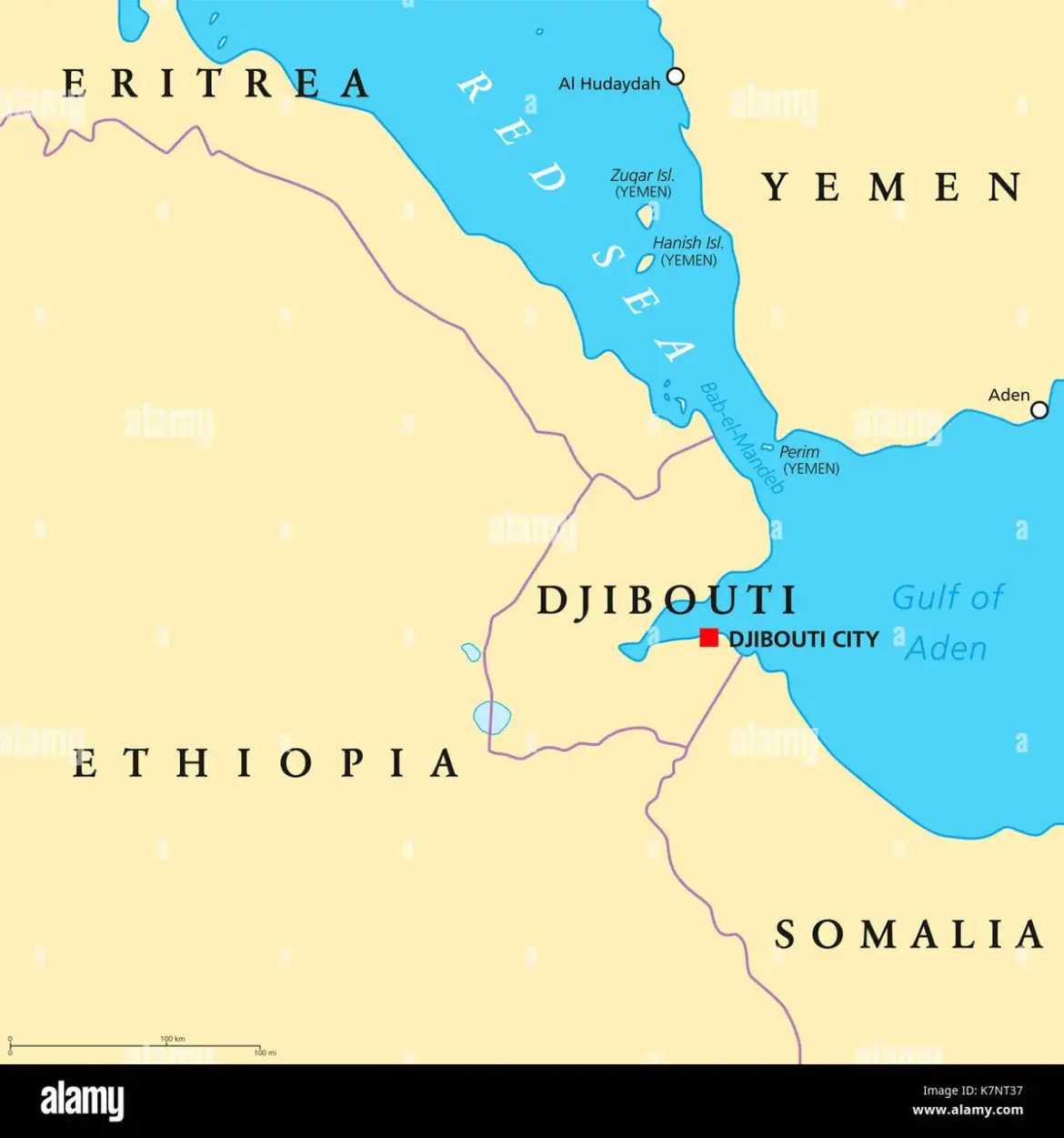
What are the implications of rising tensions in the Bab el-Mandeb Strait? The answer is critical: this strategic waterway is essential for global maritime trade and energy supplies. The Bab el-Mandeb Strait connects the Red Sea to the Gulf of Aden and serves as a gateway to the Suez Canal, with about 10% to 12% of the world’s maritime trade passing through it.
Located between the Horn of Africa and the Arabian Peninsula, the strait is just 26 kilometers (16 miles) wide at its narrowest point. Approximately 4 to 9 million barrels of oil transit the strait daily, making it a vital artery for global energy supplies. Cargo worth around $1 trillion passes through Bab el-Mandeb each year, underscoring its significance in international trade.
Recent developments have raised alarms. Iran has threatened to block the Bab el-Mandeb Strait amid escalating tensions in the region. The Islamic Revolutionary Guard Corps (IRGC) has stated, “The Bab al-Mandab Strait is considered one of the world’s strategic straits, and Iran has both the will and the ability to create a completely credible threat against it.” This assertion highlights the potential for conflict in a region already fraught with instability.
The Houthis, a group based in Yemen, have pledged their support to Iran in controlling the Bab el-Mandeb Strait. This alliance could further complicate the geopolitical landscape, as the strait is already referred to as “Hormuz 2.0” due to its strategic importance, akin to the Strait of Hormuz.
Historically, the Bab el-Mandeb gained prominence after the opening of the Suez Canal in 1869, which significantly increased maritime traffic through the strait. Today, it remains a crucial chokepoint for global energy supplies, with 12% of global crude oil shipments passing through.
As tensions escalate, the international community watches closely. The potential for conflict in this vital maritime corridor could have far-reaching implications for global trade and energy security. Details remain unconfirmed regarding the exact nature of Iran’s threats and the Houthis’ involvement, but the stakes are undeniably high.
With the strait being located 1,200 miles off the Strait of Hormuz, its security is paramount for countries reliant on oil exports. The situation remains fluid, and the next steps taken by Iran, the Houthis, and other regional players will be crucial in determining the future stability of this strategic waterway.