Introduction
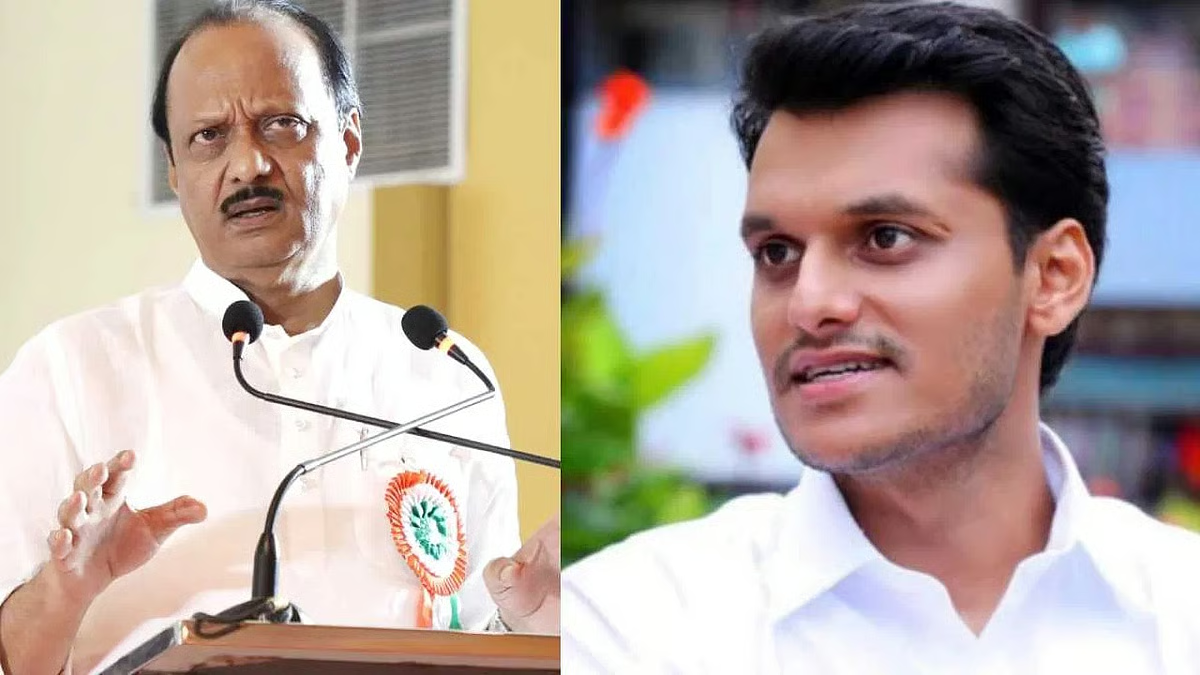
Ajit Pawar, a prominent figure in Maharashtra’s political arena, has played a significant role in shaping the state’s policies and governance. As the Deputy Chief Minister of Maharashtra, his decisions and strategies have far-reaching implications for not just the region, but the political landscape of India as a whole. His journey reflects the dynamic nature of Indian politics and the shifting alliances that are characteristic of the environment.
Political Career and Recent Developments
Born on July 22, 1960, Ajit Pawar is a member of the Nationalist Congress Party (NCP) and has held various important positions over the years. He has been the face of the party in Maharashtra and is known for his astute political acumen. Recently, in July 2023, Ajit Pawar made headlines when he took a significant political step by aligning with the Bharatiya Janata Party (BJP) and joining the Maharashtra government as Deputy Chief Minister. This move was seen as a turning point in Maharashtra politics, changing the balance of power in the state.
The realignment of Ajit Pawar signifies a strategic shift in alliances, which has raised questions about the stability of the current government and the future of opposition parties, particularly the Shiv Sena and the Congress. His decision to support the BJP has attracted both praise and criticism from various political factions and analysts alike, adding to the complexities of Maharashtra’s governance.
Impact and Future Implications
Ajit Pawar’s involvement in the government is not just notable for its immediate effects but also for its potential implications on future elections in Maharashtra. With local body polls on the horizon, his position could sway voter sentiment and reshape campaign strategies for various parties. The dynamics of Maharashtra politics could evolve further as smaller regional parties may have to reassess their positions in light of this new alliance.
Conclusion
Ajit Pawar’s political maneuvers are a crucial focal point as Maharashtra enters a pivotal phase in its political history. His leadership and strategic decisions will be significant indicators of the state’s governance trajectory. As he navigates through this politically charged environment, observers are keenly watching how his actions will influence not only the local governance but also the broader political landscape across India. The coming months will reveal the true impact of his alliance with the BJP and how it will shape the future of Maharashtra politics.