What is the significance of the Amul cooperative model in Odisha?
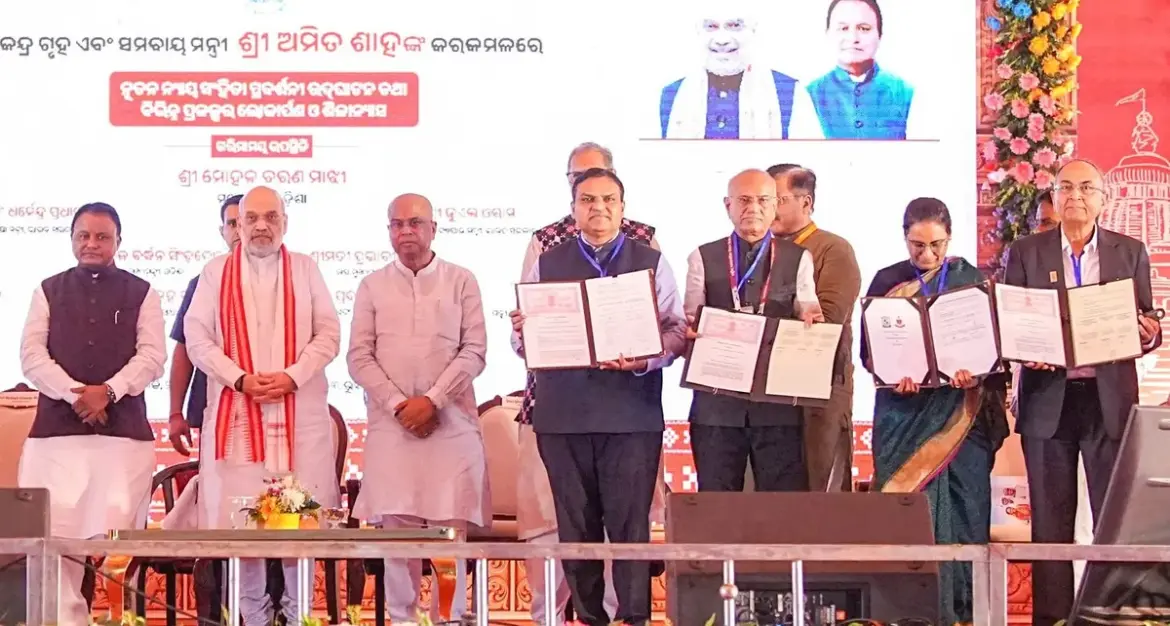
The recent initiatives in Odisha highlight the expanding influence of the Amul cooperative model, particularly in transforming rural economies. On March 7, 2026, Union Home Minister Amit Shah inaugurated and laid the foundation stones for development projects worth over Rs 3,770 crore in the state, emphasizing the cooperative sector’s pivotal role.
Shah noted that the government plans to establish dairy cooperatives across villages in Odisha, similar to the successful model implemented by Amul in Gujarat. He stated, “The cooperative sector will play a central role in transforming rural economies in the state,” indicating a strategic focus on enhancing local livelihoods.
Amul, which conducts business worth Rs 1.3 lakh crore, has significantly benefited women cattle herders in Gujarat, with around 3.6 million rural women involved in its operations. Shah remarked, “Today in Gujarat, through 3.6 million rural women, Amul became a movement, and today Amul does business worth Rs 1.3 lakh crore. Its profit, down to every penny, goes to the women cattle herders of Gujarat.” This success story serves as a model for Odisha’s cooperative initiatives.
In addition to the dairy sector, the government is also looking to empower fishing communities through the Matsya Shakti initiative. This program aims to provide skill development and entrepreneurship opportunities, with approximately 690 beneficiaries expected to receive training in various fisheries-related activities. Furthermore, over 400 women are anticipated to receive leadership and entrepreneurship training as part of this initiative.
The National Dairy Development Board (NDDB) and the Odisha State Cooperative Milk Producers’ Federation (OMFED) are key players in these initiatives, collaborating to enhance the cooperative framework in the state. The government is also willing to support the transformation of Kerala’s MatsyaFed into a national-level cooperative institution similar to Amul, as stated by George Kurian, who mentioned, “If the Kerala government proposes a comprehensive development plan, the Centre would extend financial and technical support to scale up MatsyaFed into a nationwide cooperative framework.”
Shah’s visit also highlighted Odisha’s achievements in law enforcement, noting a conviction rate of over 87 percent in FIRs under new criminal laws. This statistic underscores the government’s commitment to improving governance alongside economic development.
As these initiatives unfold, the focus will remain on how effectively they can replicate the success of the Amul model in Odisha’s rural landscape. The cooperative sector has historically played a transformative role in strengthening rural and sectoral economies in India, and the outcomes of these new projects will be closely monitored.
Details remain unconfirmed regarding the specific timeline and implementation strategies for these cooperatives, but the government’s commitment to rural development is clear.