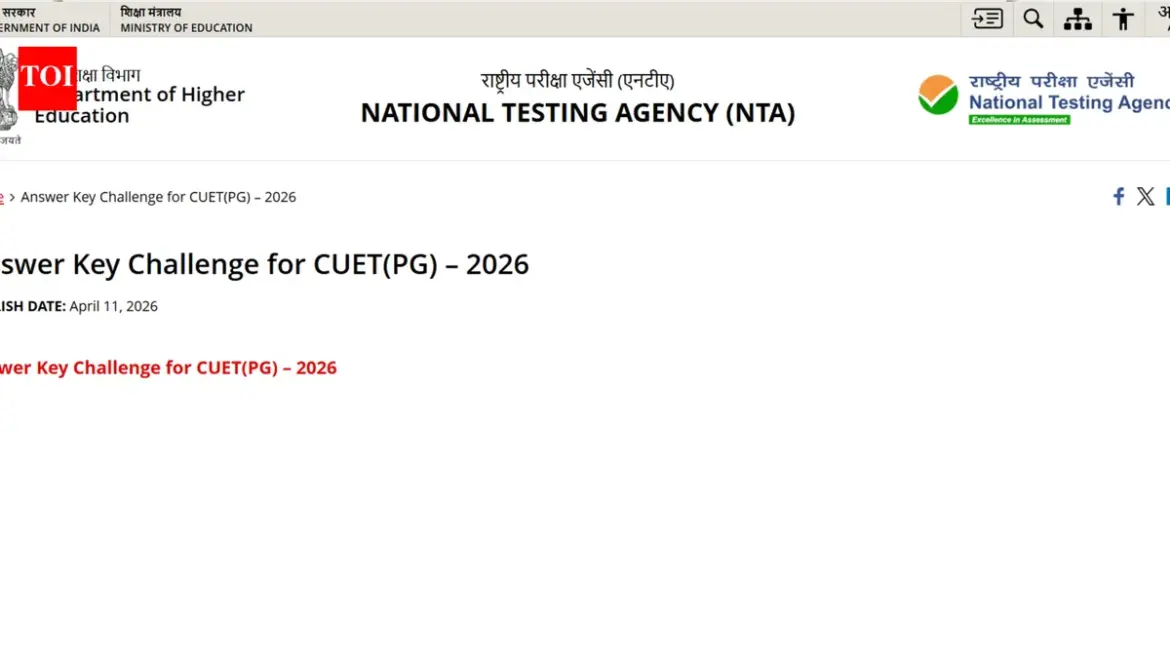
The release of the CUET PG 2026 answer key and response sheet marks a pivotal moment for postgraduate aspirants across India. This development is significant as it sets the stage for the admissions process into various universities, including the prestigious Jawaharlal Nehru University (JNU). With the challenge window for objections open from April 11 to April 14, 2026, candidates are urged to scrutinize their responses closely, as the final answer key, which will be binding, will be released after this review period.
The implications of the CUET PG 2026 extend beyond just the release of the answer key. The introduction of a non-refundable objection fee of ₹200 per question raises questions about accessibility for many candidates. This fee could deter some from challenging answers they believe to be incorrect, potentially impacting their overall scores and subsequent admissions. The stakes are high, as the results of this examination will determine eligibility for various postgraduate programs, including those at JNU, which will commence its admissions process once the CUET PG results are declared.
Understanding the safe score ranges is crucial for candidates aiming for competitive programs. For the General category, a safe score is estimated to be between 210 and 230, while OBC candidates should aim for scores between 200 and 220. SC candidates are advised to target scores of 180 to 200, and ST candidates should aim for a range of 160 to 180. These figures serve as benchmarks that can help students gauge their performance relative to the cut-off marks expected for various programs.
As the academic year 2026-27 approaches, the pressure mounts for candidates who must have appeared for CUET PG 2026 to qualify for JNU admissions. This requirement underscores the importance of the CUET PG examination in shaping the academic futures of thousands of students. The reliance on this single examination for admission into prestigious institutions highlights the competitive nature of postgraduate education in India.
Furthermore, it is important to note that admissions to specific courses, such as the MSc in Biotechnology, will be based on the GAT-B score, which adds another layer of complexity for candidates. This differentiation in admission criteria emphasizes the need for candidates to be well-prepared and informed about the specific requirements of their desired programs.
As the examination process unfolds, candidates are left with uncertainties regarding the final answer key and the implications of their scores. While the challenge window provides an opportunity for candidates to contest any discrepancies, the binding nature of the final answer key means that any errors could have lasting consequences on their academic careers. Details remain unconfirmed regarding how many candidates will utilize the objection process and how this may affect the overall results.
In summary, the CUET PG 2026 is a critical juncture for postgraduate aspirants in India. The release of the answer key, the establishment of safe score ranges, and the subsequent admissions processes will shape the academic landscape for many. As candidates navigate this challenging terrain, the importance of being informed and proactive cannot be overstated.