Background on Uber’s Autonomous Vehicle Strategy
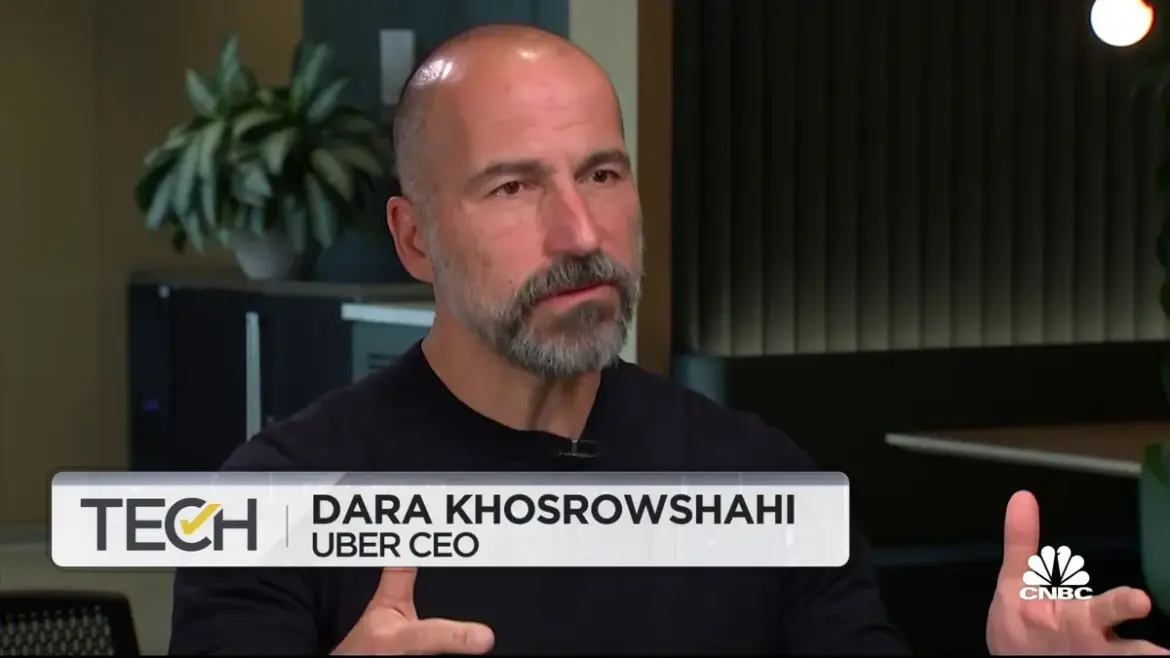
Uber is accelerating its push into autonomous vehicle technology. As the CEO of Uber Technologies, Inc., Dara Khosrowshahi has articulated a vision where the majority of Uber rides could be fulfilled by automated vehicles within the next 15 to 20 years. This ambitious timeline reflects the company’s commitment to integrating advanced technology into its operations.
Recent Developments
In a recent statement, Khosrowshahi highlighted the launch of Uber Autonomous Solutions, aimed at coordinating the company’s global robotaxi efforts. Despite this progress, he cautioned that the transition to robotaxis will not happen in the near term, emphasizing the need for regulatory approval, technological advancements, and infrastructure development.
Khosrowshahi stated, “You can imagine the majority of our trips being fulfilled by robots of some kind.” This statement underscores the transformative potential of autonomous vehicles in the ride-sharing industry.
While Uber is making strides, the broader landscape includes competitors like Waymo and Tesla Inc.. Waymo operates remote assistance centers in multiple U.S. states and the Philippines, employing around 70 agents to support its autonomous vehicle operations. Meanwhile, Tesla CEO Elon Musk has asserted that Tesla expects to maintain the largest fleet of autonomous vehicles.
As Uber continues to navigate this complex landscape, observers will be watching closely to see how the company balances innovation with the necessary regulatory and technological frameworks to support its ambitious goals.