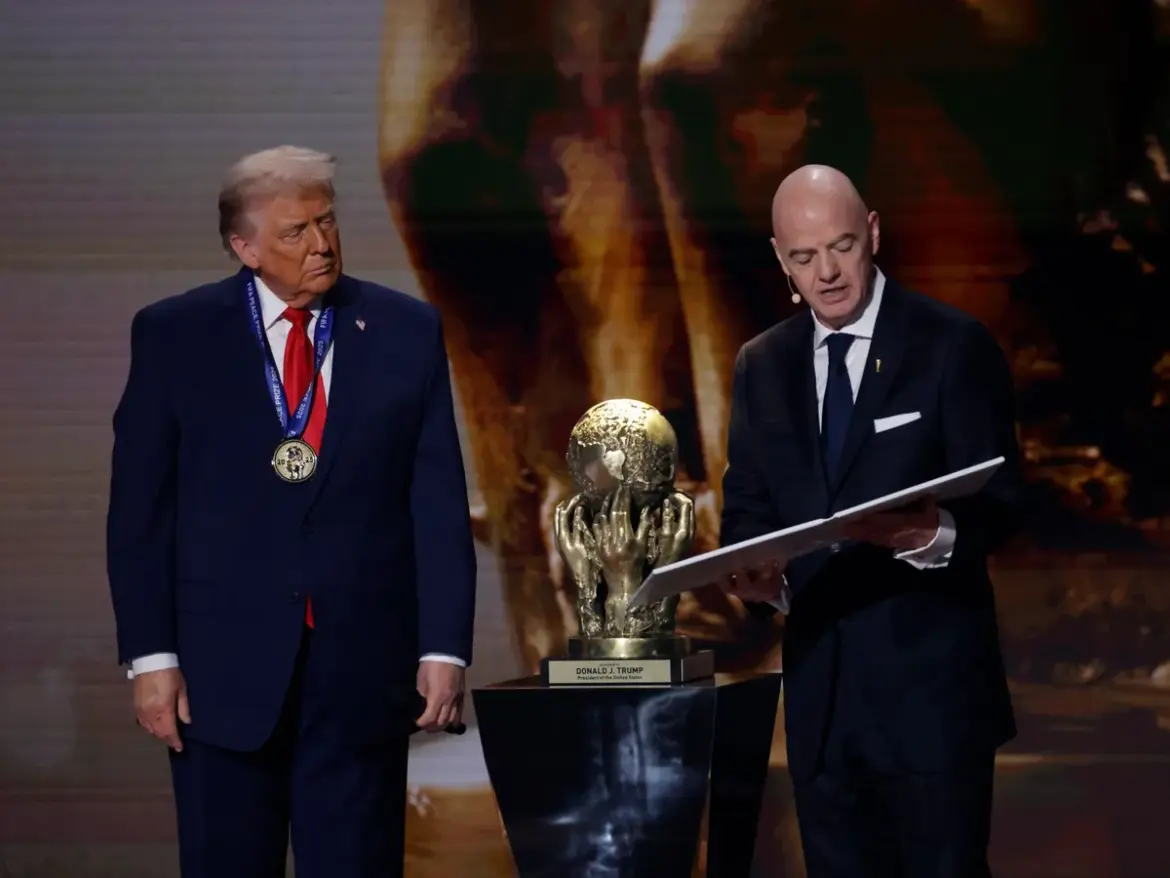
“The president is focused on making this the greatest World Cup ever while ensuring it is the safest and most secure in history,” stated Davis Ingle, a spokesperson for the preparations surrounding the upcoming FIFA World Cup 2026.
Set to take place across the United States, Canada, and Mexico, this tournament will mark a significant milestone as it expands to feature 104 matches with 48 teams, a notable increase from the previous 64 matches and 32 teams format. This expansion reflects FIFA’s ongoing efforts to enhance the global appeal of the sport.
Historically, the FIFA World Cup has been a cornerstone of international football since its inception in 1930, with the first tournament won by Uruguay. Over the decades, it has evolved into a global spectacle, with the men’s all-time top scorer, Miroslav Klose, netting 16 goals across four tournaments from 2002 to 2014, while Brazilian star Marta has made her mark by becoming the top scorer across both men’s and women’s tournaments with 17 goals.
However, preparations for the 2026 tournament are reportedly behind schedule, primarily due to delayed federal security funding amounting to $625 million. This funding is crucial for ensuring the safety of players and fans alike, especially in light of the heightened security concerns that accompany such large-scale events.
Ingle’s comments come at a time when FIFA is also navigating the complex landscape of broadcasting rights. While the organization has successfully closed deals across Asia, India remains unsigned, a situation that reflects the challenges of penetrating a sports market dominated by cricket. As Ashish Bhasin pointed out, “The sports market in India is totally and completely dominated by cricket,” making it difficult for football to gain the same level of visibility.
Moreover, the advertising market’s impact is projected to decline from $12.6 billion during the 2018 World Cup to an estimated $10.5 billion for the 2026 event. This decline raises questions about the financial viability of football in regions where cricket reigns supreme, with one industry expert noting, “Football has no breaks. In cricket, every over has a break. In football, there are no chances to show ads.”
As the countdown to the World Cup continues, the focus remains on overcoming these hurdles to deliver a tournament that lives up to its ambitious goals. With only a few years left, the pressure is on to finalize preparations and ensure that the event not only meets expectations but sets new standards in the realm of international sports.
Details remain unconfirmed regarding the exact timeline for resolving the broadcasting issues and securing the necessary funding, but the commitment to making the FIFA World Cup 2026 a landmark event is clear.