The original Bitcoin faucet, created in 2010 by Gavin Andresen, played a pivotal role in the early adoption of Bitcoin by distributing small amounts of the cryptocurrency for free. Users could earn up to 5 bitcoins by completing a simple CAPTCHA, which significantly contributed to the spread of Bitcoin among early adopters. This innovative approach allowed tens of thousands of bitcoins to be distributed globally before the faucet was ultimately closed due to rising Bitcoin prices.
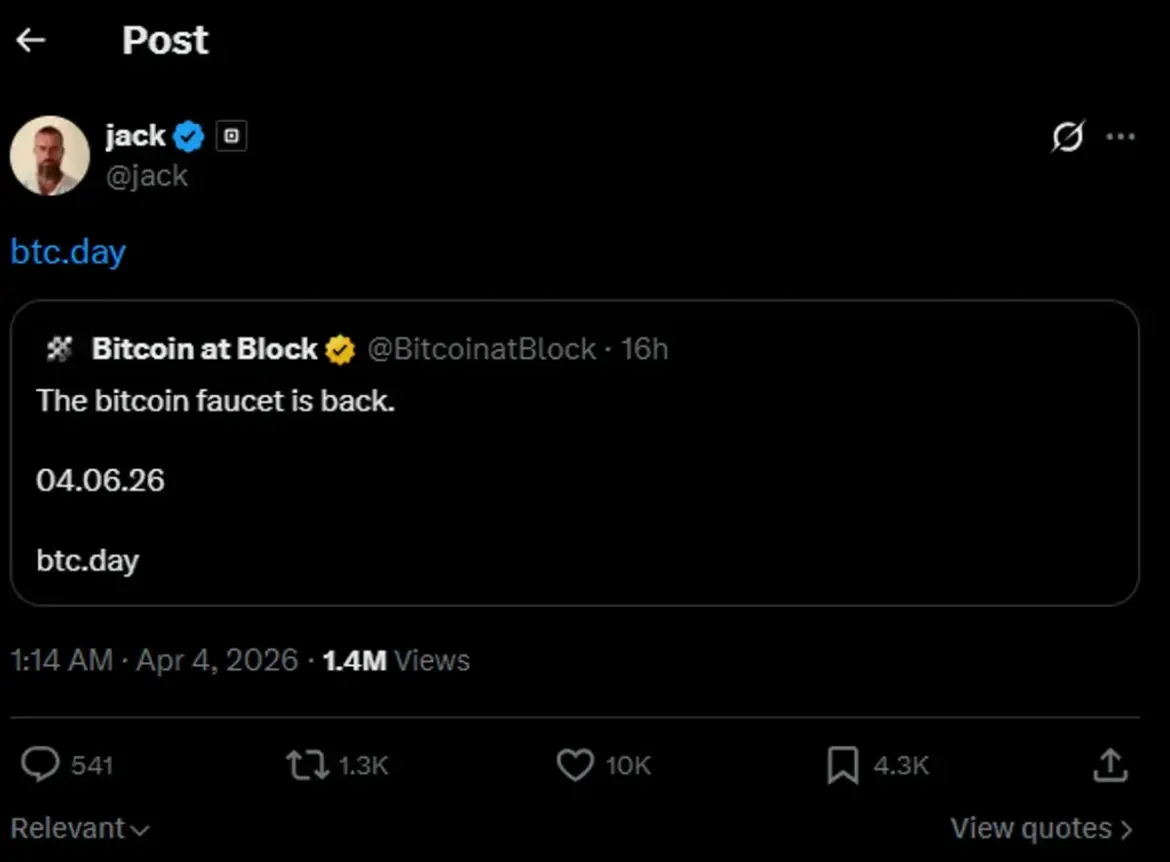
In a recent announcement, Jack Dorsey revealed plans to bring back the Bitcoin faucet, with the revival set for April 6, 2026. Dorsey, known for his advocacy of cryptocurrency, made the announcement via a post on X (formerly Twitter), stating, “Bitcoin Faucet is coming back on April 6.” This move is seen as a strategic effort to lower barriers to entry for Bitcoin, aiming to reignite interest and participation in the cryptocurrency.
The revival of the Bitcoin faucet is particularly significant as it comes at a time when the cryptocurrency market is evolving, and user engagement is crucial for sustaining growth. Faucets were instrumental in Bitcoin’s early days, distributing tiny amounts of BTC, often referred to as satoshis, to encourage new users to join the network. The new faucet is expected to follow a similar model, although details about the amount to be distributed and the mechanics of its operation remain unconfirmed.
Modern compliance frameworks surrounding Anti-Money Laundering (AML) and Know Your Customer (KYC) regulations will likely influence how the new faucet operates. Observers are keen to see how these regulations will shape the distribution process, especially given the original faucet’s unregulated nature.
The return of the Bitcoin faucet raises a key question: could it help to reignite large-scale BTC adoption? As the cryptocurrency landscape continues to evolve, initiatives like this could play a crucial role in attracting new users and fostering a broader understanding of Bitcoin.
As the launch date approaches, anticipation builds around the potential impact of this revival on Bitcoin’s user base and market dynamics. Dorsey’s initiative reflects a growing recognition of the need to make cryptocurrency more accessible to a wider audience.