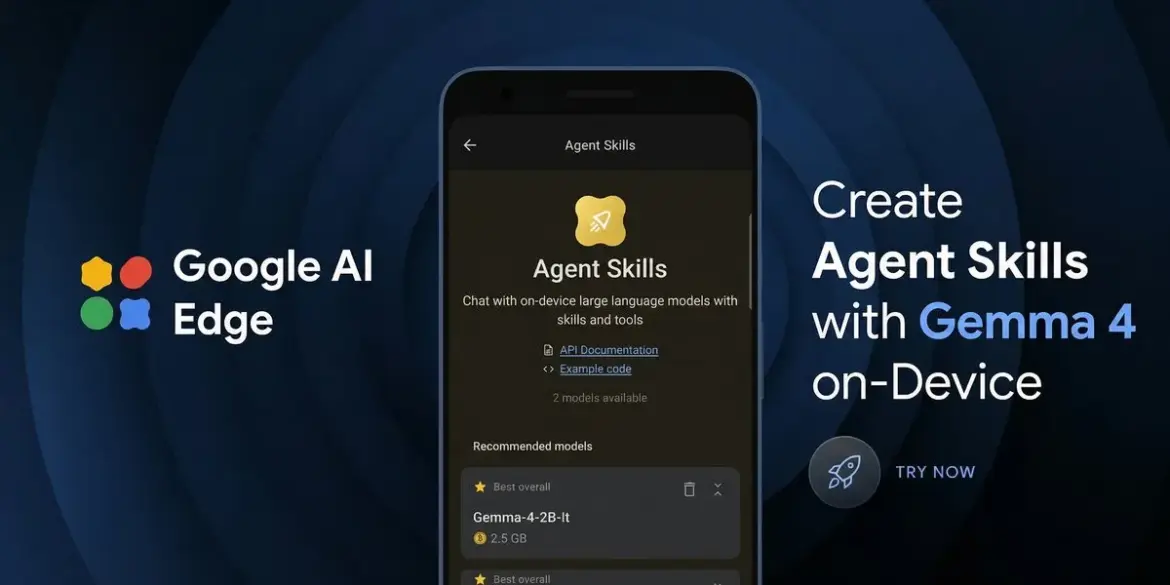
Just before the launch of Gemma 4 AI, the tech community was buzzing with anticipation. Google DeepMind had been hinting at a new family of open models that promised to redefine the capabilities of artificial intelligence.
On the day of its release, Google DeepMind unveiled Gemma 4, a state-of-the-art family of models designed to support over 140 languages. This extensive language support positions Gemma 4 as a versatile tool for developers worldwide, enabling them to create applications that cater to diverse user bases.
One of the standout features of Gemma 4 is its 128K context window, allowing for the processing of long-form content with unprecedented efficiency. This capability is particularly significant for applications requiring deep contextual understanding, such as natural language processing and content generation.
Moreover, Gemma 4 models are optimized for various devices, including mobile, desktop, IoT, and robotics. This flexibility means that developers can deploy sophisticated AI solutions across a wide range of platforms, enhancing accessibility and usability.
In addition to its language and device versatility, Gemma 4 supports high-quality offline code generation, turning workstations into local-first AI code assistants. This feature is crucial for developers looking to maintain privacy and security while leveraging AI capabilities.
Notably, the E2B and E4B models of Gemma 4 incorporate native audio input for speech recognition, further broadening the scope of applications that can be developed. This advancement aligns with the growing demand for voice-activated technologies in everyday devices.
Performance metrics reveal that Gemma 4 can achieve a prefill throughput of 133 tokens per second on a Raspberry Pi 5, showcasing its efficiency even on lower-end hardware. This performance is complemented by the models’ ability to process 4,000 input tokens in under 3 seconds, making it a formidable tool for real-time applications.
As developers begin to explore the capabilities of Gemma 4, the potential for creating autonomous agents that can interact with various tools and APIs opens new avenues for innovation. The models, which include 26B and 31B versions optimized for specific hardware, are designed to facilitate efficient fine-tuning.
Currently, Gemma 4 stands at the forefront of AI development, with its open model architecture encouraging collaboration and experimentation within the developer community. The excitement surrounding its launch is palpable, as many anticipate the transformative impact it will have on the future of AI applications.
This sequence of events matters significantly for developers and researchers alike, as Gemma 4 not only enhances the capabilities of AI but also democratizes access to advanced technologies. As Google DeepMind stated, “The era of agentic experiences on-device is here, and we hope you are excited to start building on the edge.”