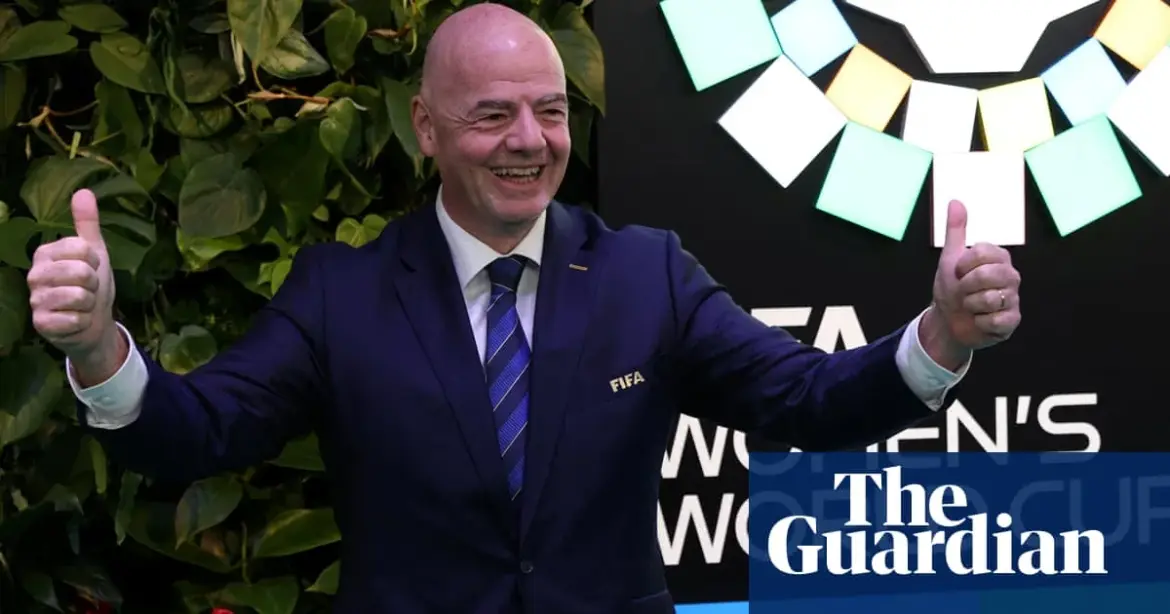
New Zealand Football (NZF) has diverged from the Oceania Football Confederation (OFC) by withdrawing its support for FIFA president Gianni Infantino. This decision positions New Zealand as the latest national football association to express a lack of confidence in Infantino’s leadership, particularly following his abandoned plans to sell a portion of the World Cup’s commercial rights to private investors.
The OFC, in contrast, has declared its support for Infantino, praising the progress in football development within Oceania under FIFA’s leadership over the past decade. This stance was articulated in a statement from the OFC Executive Committee, which also welcomed FIFA’s decision to retract the Fifa Forward Enterprise (FFE) proposal and its commitment to review related issues. The OFC encouraged FIFA to use this review as an opportunity to identify and implement necessary changes.
NZF’s move aligns it with several other individual member nations, including England, Wales, Norway, the Republic of Ireland, and Northern Ireland, which have also confirmed they will not back Infantino’s re-election bid. Furthermore, three major regional confederations—Europe’s Uefa, the Asian Football Confederation (AFC), and Concacaf (North and Central America and the Caribbean)—have previously withdrawn their support for Infantino over the commercial rights proposal.
Call for Independent Review
New Zealand Football has also called for an independent review into the processes involved in developing the Fifa Forward Enterprise Scheme (FFE). According to an NZF statement, careful consideration led the organisation to conclude that FIFA’s decisions and actions have contributed to a breakdown of trust and increased division within international football. The federation believes an independent review is essential to restore confidence and trust in the global administration of the sport.
Andrew Pragnell, chief executive of NZF, emphasised the importance of an independent review, stating that the intention is to avoid an internal, superficial assessment. He noted that other confederations have also advocated for such a review as a means to rebuild trust. NZF views this period as an opportunity for all FIFA member associations to champion stronger governance, accountability, and transparency, which are considered fundamental to maintaining confidence in the administration of global football.
This call for an independent review echoes demands made by the three confederations that have opposed Infantino. The FFE proposal, which involved selling 20% of the World Cup’s commercial rights, was a significant point of contention leading to the withdrawal of support from these major football bodies.
Divisions in World Football
The differing positions highlight a growing division within world football regarding Infantino’s leadership. While Uefa, Concacaf, and the AFC represent a significant portion of FIFA’s 211 members, accounting for 143 votes, some powerful nations within these blocks have chosen to support Infantino. For instance, Mexico, Grenada, and St Kitts and Nevis, all members of Concacaf, have backed Infantino despite their confederation’s stance.
Conversely, the Confederation of African Football (Caf) and the South American governing body Conmebol have publicly endorsed Infantino for a fourth presidential term at the upcoming FIFA Congress in March. Argentina, for example, is aligned with Conmebol in its support. The OFC’s declaration of support, following a meeting of its executive committee in Fiji, completes a symbolic division within world football, with the confederation being the last to state its position.
The OFC, despite being the smallest confederation with 11 full members, holds votes that could prove crucial in the upcoming presidential election, particularly as Infantino faces his first leadership challenge in a decade. New Zealand was the only OFC member to qualify for the 2026 Fifa World Cup, while fellow member New Caledonia has reaffirmed its support for Infantino. NZF’s decision, based on its values, aims to ensure transparency and accountability in the sport’s global governance.
The NZF chief executive, Andrew Pragnell, stated that the decision to withdraw support was rooted in the organisation’s values, aiming to ensure that the global football community understands their position. He added that New Zealand prioritises its values and the interests of fans and the football community, acknowledging the strong calls for change within the sport. Pragnell also expressed concern for the dedicated professionals within FIFA, recognising the difficult situation they face.
The OFC’s continued backing for Infantino, particularly from smaller nations like American Samoa and the Cook Islands, is expected to be a recurring theme in the presidential election. This demonstrates a clear split between larger and smaller football associations regarding the current FIFA leadership. The OFC’s statement, delayed until two days after its executive committee meeting, followed persistent inquiries regarding its position on the matter.
The decision by New Zealand Football to break ranks is particularly significant given its role as co-host of the 2023 Women’s World Cup with Australia, an event that benefited from Infantino’s leadership. Despite acknowledging positive developments under FIFA, NZF ultimately concluded that the manner in which the FFE proposal emerged was unacceptable.
The FIFA Congress in March will be a key event where Infantino will seek a fourth presidential term amidst these divided opinions.
Source: bbc.com