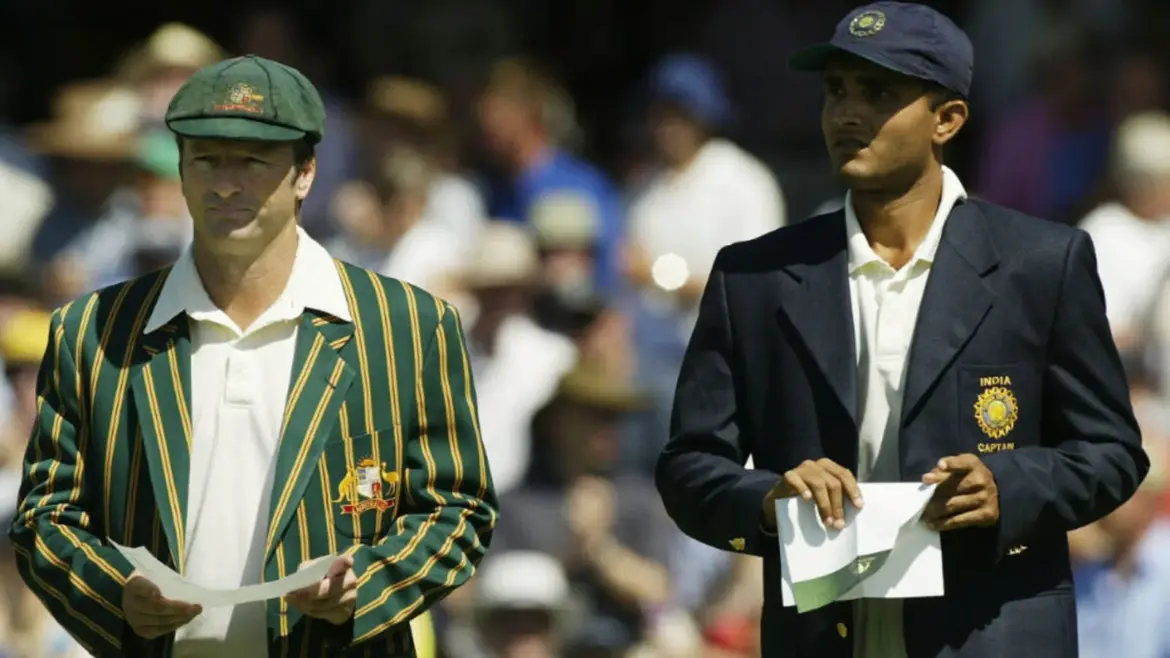
Former India cricketer Javagal Srinath recently discussed a notable incident from the 2001 Border-Gavaskar Trophy, where then-captain Sourav Ganguly kept Australian skipper Steve Waugh waiting for the toss at Eden Gardens. Srinath indicated that if he had been the match referee at the time, Ganguly would have faced disciplinary action.
Srinath stated, “I would have banned Sourav for a few games!” when recalling the event. This delay was widely seen as an act of gamesmanship that reportedly unsettled Waugh and the Australian team during the series, which India ultimately won 2-1. Ganguly later attributed the delay to being unable to locate his blazer, though this explanation has been debated.
Ganguly’s Leadership and Team Transformation
Despite his comments on the toss incident, Srinath offered praise for Ganguly’s leadership qualities during his tenure as India captain. Srinath highlighted Ganguly’s role in nurturing young talent, including players such as Yuvraj Singh, Harbhajan Singh, and Virender Sehwag. These cricketers later became integral to the success of the Indian team.
Srinath also reflected on the broader changes within Indian cricket during that period. He observed that the sport underwent a significant transformation following the match-fixing controversies of the late 1990s. Players developed a collective determination to restore the game’s integrity and demonstrate its clean image to the world.
“There was a bit of a resoluteness in each and every player to really put that image back and then prove the world that cricket is superior, cricket is clean,” Srinath remarked. He added that leadership from the top four or five players, who were aligned in their vision, helped India achieve consistent wins at home and improve their performance overseas.
Srinath recalled that India had struggled to win abroad between 1991 and 1997-98, but this trend began to shift from 1999 onwards, coinciding with the team’s renewed resolve.
Recollections and Future of Cricket
Srinath also shared an anecdote about the 2003 World Cup final against Australia. He revealed that he had advocated for India to bat first after team discussions, believing it would put Australia under pressure. However, Ganguly had a different perspective, and once the decision was made, Srinath noted that the team had to move forward, acknowledging that Australia proved to be too strong on that occasion.
He further recounted recommending bowler Zaheer Khan to selector Chandu Borde after observing Zaheer take six wickets against Air India while representing the MRF Pace Foundation. When Borde jokingly questioned what would happen to Srinath if Zaheer was selected, Srinath’s response was direct: “If he’s good, he replaces me.”
Srinath also offered a light-hearted comment about Rahul Dravid, describing him as “not the best roommate” due to his habit of leaving items scattered, contrasting this with Venkatesh Prasad, whom he described as “spick and span.”
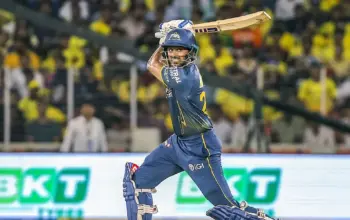
Addressing the emergence of young talent like Vaibhav Sooryavanshi, Srinath cautioned against making comparisons to players such as Sachin Tendulkar and Virat Kohli. He emphasized that different eras present different challenges for cricketers. Srinath stated, “When you judge a player it’s just not the white ball, it is the red ball cricket as well. Sooryavanshi is a wonderful talent, I think he’s still too young. I hope he develops the maturity like Sachin and has that strong head on his shoulders like Virat.”
Concluding his reflections, Srinath called for improved balance between bat and ball in cricket, citing factors such as shorter boundaries, larger bats, and less pronounced seams. He expressed a desire for measures to be taken to restore equilibrium in the game.
Srinath’s reflections provide insight into a pivotal period for Indian cricket, marked by both on-field incidents and significant team development.
Source: sports.yahoo.com