Understanding the Chandra Grahan Timings
The anticipation surrounding the Chandra Grahan, or lunar eclipse, on March 3, 2026, has been building as enthusiasts and astronomers prepare for this celestial event. Historically, lunar eclipses have captivated observers, offering a unique opportunity to witness the interplay between the Earth, Moon, and Sun. Before this event, many were eager to know the exact timings to plan their viewing experiences.
Key Timings of the Lunar Eclipse
On this day, the Sutak Kaal, a period considered inauspicious for certain activities, will begin at 6:23 AM and will last until the eclipse concludes. The lunar eclipse will commence with the penumbral phase at 2:14 PM, followed by the partial eclipse starting at 3:30 PM. The totality phase, where the Moon is completely covered by the Earth’s shadow, will begin at 4:58 PM and reach its maximum at 5:25 PM. This totality will end at 5:32 PM, with the partial eclipse concluding at 6:47 PM and the penumbral phase finishing at 7:53 PM.
Significance of the Eclipse Timing
This particular lunar eclipse is noteworthy as it coincides with Holi, a festival celebrated with vibrant colors and joy across India. The overlap of these two events is expected to enhance public interest and participation in both the festivities and the astronomical observation. The northeastern states of India are anticipated to provide the most dramatic views of the eclipse, making it a focal point for many enthusiasts.
Expert Perspectives on the Event
Experts in astronomy highlight the importance of such celestial events in fostering public interest in science. The Chandra Grahan serves as an educational opportunity, allowing individuals to engage with astronomical phenomena. As the eclipse unfolds, many will be encouraged to observe the changes in the Moon’s appearance, which can be a profound experience for both seasoned astronomers and casual observers alike.
Historical Context of Lunar Eclipses
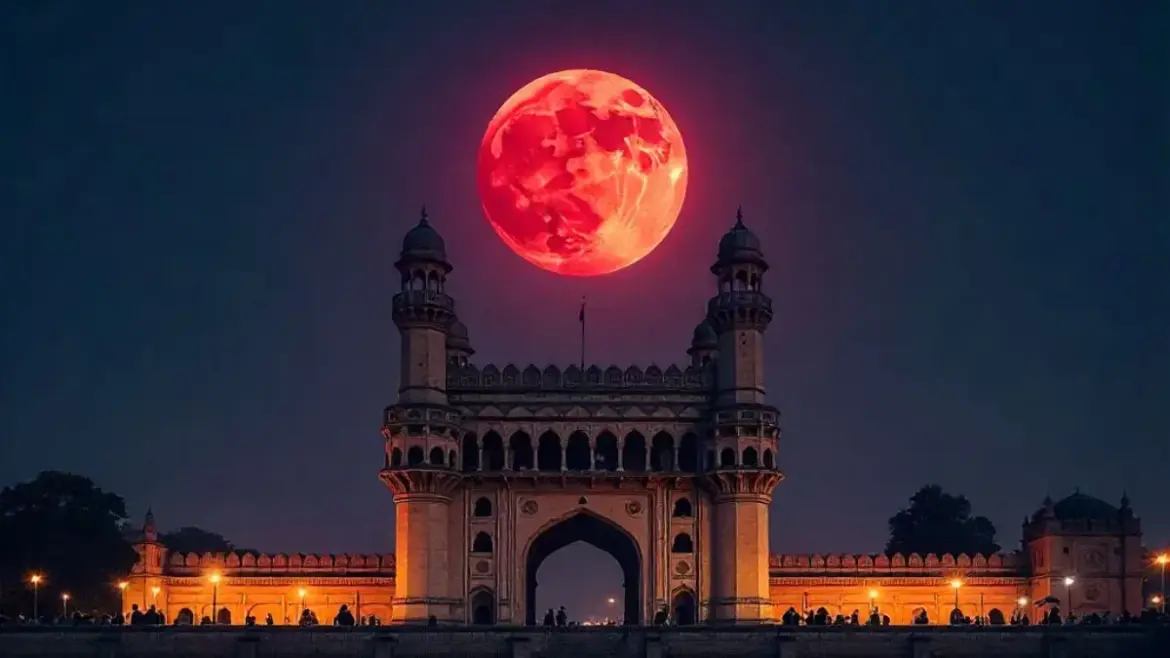
Lunar eclipses have been observed for centuries, often steeped in cultural significance and myth. In various cultures, these events have been interpreted in numerous ways, from omens to celebrations. The upcoming Chandra Grahan is expected to continue this tradition, as communities come together to witness the spectacle of the Blood Moon, a term used to describe the reddish hue the Moon takes on during totality.
Looking Ahead
As the date approaches, many are preparing for the Chandra Grahan by gathering information on the best viewing practices and safety measures. While the excitement builds, it is essential for observers to be aware of the timings and phases of the eclipse to enhance their experience. The event is not only a chance to witness a natural phenomenon but also an opportunity to reflect on the wonders of our universe.
With the Chandra Grahan set to occur on March 3, 2026, the timings and phases of the eclipse are crucial for those wishing to partake in this celestial event. As the eclipse approaches, the anticipation continues to grow, promising a memorable experience for all involved.