The recent developments in Iran raise a critical question: How has the Islamic Revolutionary Guard Corps (IRGC) managed to consolidate power amidst a political deadlock? The answer lies in the IRGC’s strategic maneuvering, which has effectively sidelined President Masoud Pezeshkian and established the organization as the dominant force in the Iranian political landscape.
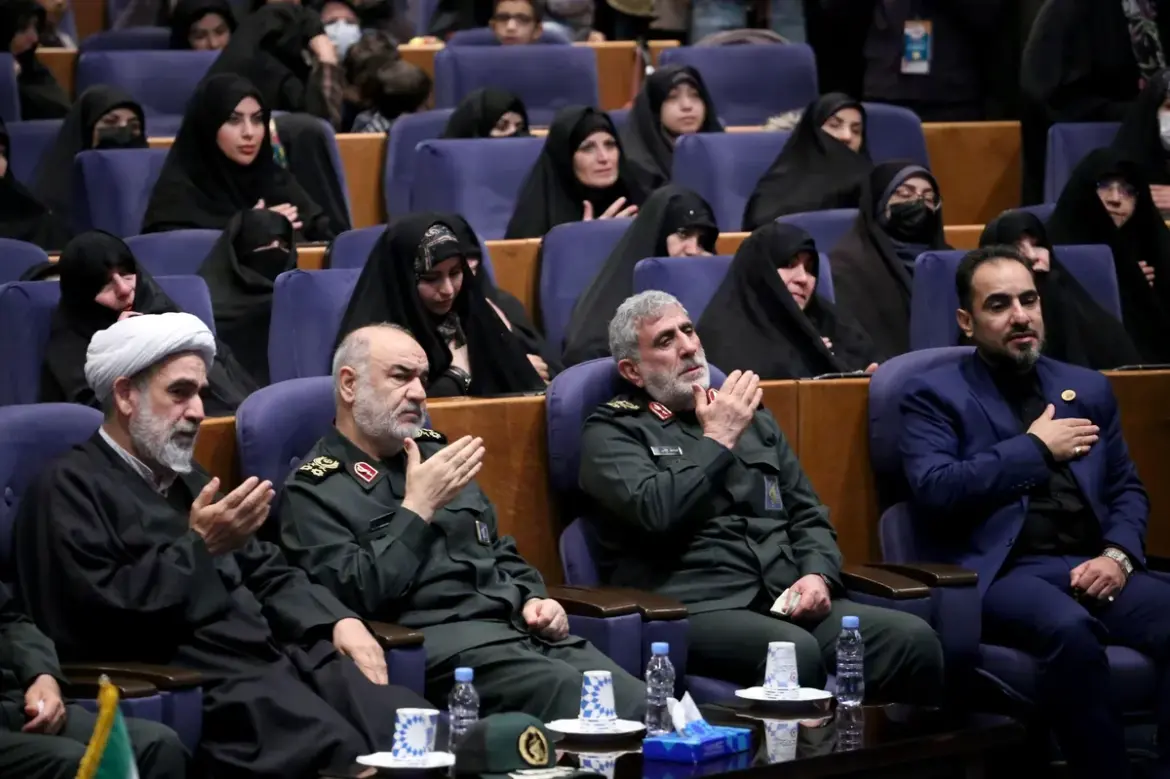
As of April 1, 2026, the IRGC has assumed control over key state functions, with a military council of senior officers making daily decisions. This shift comes as Pezeshkian finds himself in a “complete political deadlock,” unable to assert authority over a military apparatus that has increasingly operated independently of the regular army.
Notably, Mojtaba Khamenei, named as the Supreme Leader, has not been seen or heard from, raising questions about his health and capability to lead. Reports suggest he may be in a coma or critical condition, leaving the IRGC to fill the power vacuum. Ahmad Vahidi, a prominent IRGC figure, has publicly stated that all vital leadership positions should be managed by the IRGC, further entrenching its influence.
The IRGC’s actions have not been without controversy. Pezeshkian has expressed frustration over the IRGC’s approach, which he claims escalates tensions in the region by targeting neighboring Gulf countries. This has led to accusations that the IRGC is acting as a “state-within-a-state,” wielding military might, intelligence capabilities, and significant economic power.
In a stark demonstration of its authority, the IRGC has blocked presidential appointments and established a strict security cordon around Mojtaba Khamenei. Furthermore, the organization has labeled 18 U.S. companies as “terrorist” and warned their employees to evacuate, indicating a willingness to escalate confrontations beyond Iran’s borders.
Historically, the IRGC was founded in 1979 to consolidate the Islamic revolution, and its long-standing ambition has been to concentrate power within its ranks. This latest consolidation of power raises critical questions about the future of governance in Iran and the implications for regional stability.
Details remain unconfirmed regarding the current health status of Mojtaba Khamenei, and the long-term consequences of the IRGC’s dominance in Iranian politics remain uncertain. As the situation evolves, the balance of power in Iran is poised for significant changes, with the IRGC at the helm.