KOSPI Experiences Significant Decline
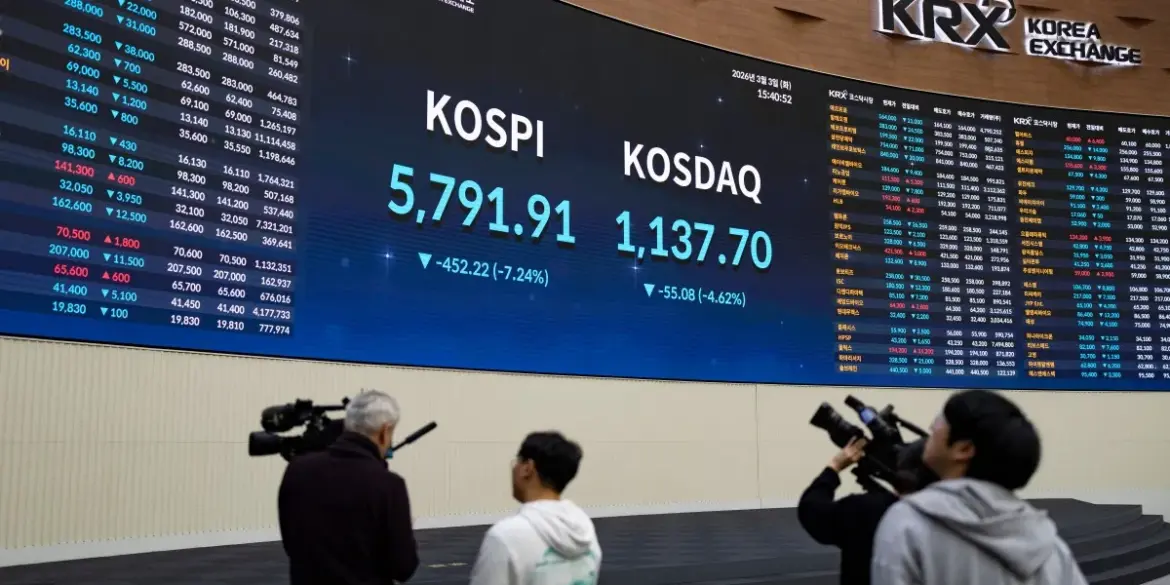
On March 9, 2026, South Korea’s KOSPI index sank by 6.2%, reflecting growing concerns over geopolitical instability in the Middle East. The index has now dropped by over 16% since the onset of the Iran war, raising alarms among investors.
The KOSPI fell more than 8% at one point, triggering circuit breakers at 0131 GMT after a sharp decline of 452.8 points, bringing it down to 5,132.07. This marks the second time this month that circuit breakers have been activated on the KOSPI.
Major companies such as Samsung Electronics and SK Hynix have seen their stock prices drop by around 20% since U.S. military strikes began, contributing to the overall market downturn. The Korean won was trading at 1,497.4 won against the U.S. dollar as of 10:40 a.m. on the same day, indicating increased pressure on the currency.
The price of WTI crude oil briefly surpassed $115 a barrel, further complicating the economic landscape for South Korea, which relies heavily on oil imports. Many Asian economies are feeling the effects of reduced oil exports from the Gulf, particularly since Iran closed the Strait of Hormuz.
Market analysts are divided on the outlook. William Bratton noted, “If the current Middle East situation continues to persist, China could even be a potential beneficiary of rotation out of Northeast Asian markets.” Meanwhile, Goldman Sachs analysts expressed a more optimistic view, stating, “We view the pullback as a correction that will likely be followed by a recovery to new highs after a period of consolidation.”
Eli Lee commented on the market’s reaction, saying, “We expected a knee-jerk risk-off market reaction, but barring an oil shock, history shows that geopolitical events typically do not negatively impact equity prices on a prolonged basis.”
As the situation develops, investors are closely monitoring the geopolitical landscape and its potential impact on the KOSPI and broader financial markets. Details remain unconfirmed regarding the long-term implications of these tensions on South Korea’s economy.