The Gen Z protests were a response to longstanding issues of economic hardship and governance in Nepal. These protests, which erupted in September 2025, were fueled by widespread discontent among the youth regarding the government’s inability to address pressing social and economic challenges. The demonstrations turned violent, resulting in a tragic loss of life, with 76 individuals reported dead, including at least 19 who were killed in police firing on September 8, 2025. This backdrop of turmoil set the stage for a significant political upheaval.
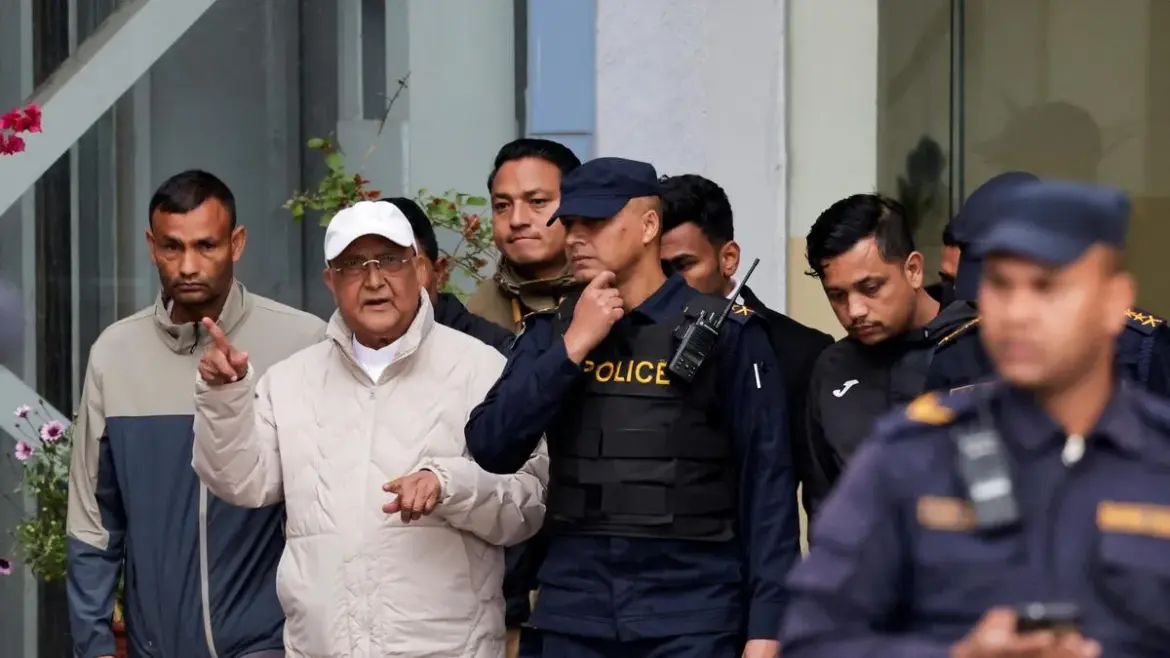
On March 28, 2026, K.P. Sharma Oli, the former Prime Minister of Nepal, was arrested from his residence in Gundu, Bhaktapur, on charges of culpable homicide linked to the protests. His arrest came just a day after a new government led by Balendra Shah was sworn in, marking a dramatic shift in Nepal’s political landscape. The new Home Minister, Sudhan Gurung, emphasized that the arrests were the beginning of justice, stating, “A promise is a promise: No one is above the law.” This statement reflects the government’s commitment to accountability in the wake of the protests.
Oli’s arrest was not an isolated incident; Ramesh Lekhak, a prominent figure in the previous administration, was also taken into custody in Suryabinayak, Bhaktapur. Both arrests stemmed from a probe commission’s recommendation for prosecution due to negligent killings during the protests. The commission’s report, submitted to the outgoing government on March 8, 2026, highlighted the need for accountability and justice for the victims of the unrest.
In the aftermath of the arrests, reactions from various political factions have been swift and polarized. While the new government heralds this moment as a step towards justice, Oli’s party, the Communist Party of Nepal (Unified Marxist–Leninist), has vehemently condemned the arrests as illegal and politically motivated. Yogesh Bhattarai, a spokesperson for the party, declared, “We will protest in the strongest form as our chairman Oli has been arrested unconstitutionally and illegally.” This statement underscores the deep divisions within Nepal’s political landscape.
As the situation unfolds, observers are keenly watching for the next steps in the legal proceedings against Oli and Lekhak. A decision regarding their custody is expected to be made after the courts reopen on Sunday. The implications of these arrests could reverberate throughout Nepal’s political sphere, potentially reshaping alliances and power dynamics.
Sudhan Gurung’s assertion that “this is not revenge against anyone; this is the beginning of justice” resonates with many who have long demanded accountability from their leaders. However, the challenge remains to ensure that the pursuit of justice does not devolve into a cycle of political retribution. The youth, who initially took to the streets demanding clean governance and accountability, now find themselves at a critical juncture where the rule of law must prevail over the rule by law.
As Nepal navigates this turbulent period, the outcomes of these arrests will likely influence the country’s trajectory for years to come. The Gen Z protests have not only highlighted the urgent need for reform but have also exposed the fragility of Nepal’s democratic institutions. The coming days will be crucial in determining whether the new government can uphold its promise of justice and accountability or if it will succumb to the pressures of political expediency.