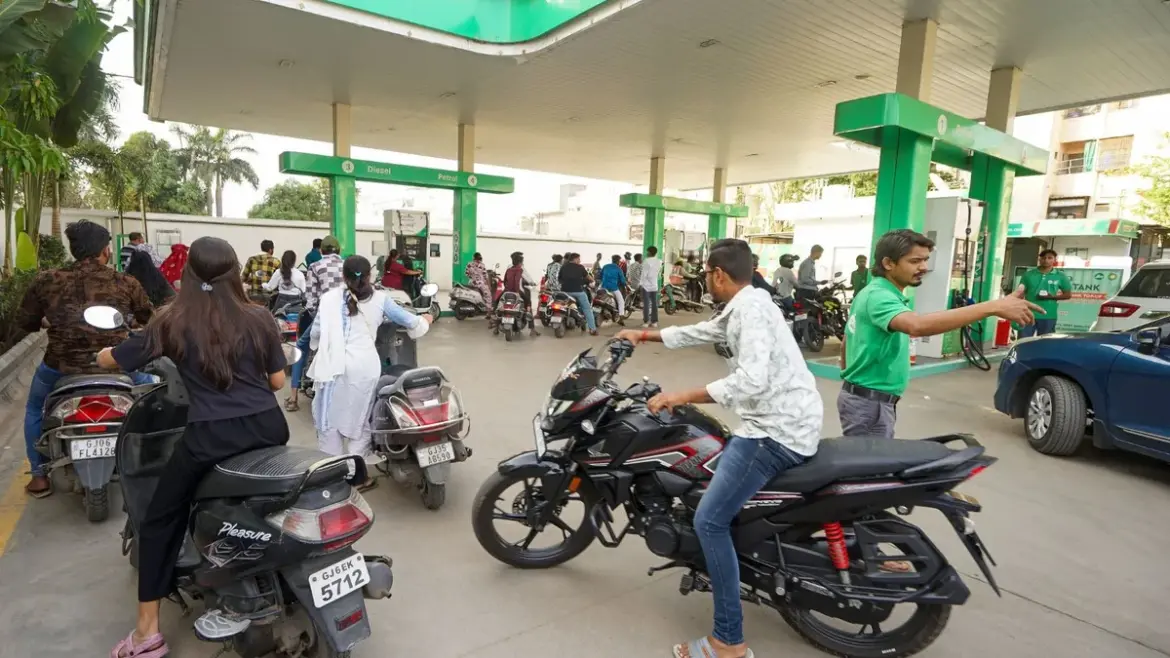
The recent petrol shortage in Ahmedabad has sparked widespread panic among residents, leading to long queues at fuel stations across the city. This situation has been exacerbated by a wave of misinformation related to the ongoing conflict in West Asia, which has raised global concerns about oil supply. Despite the chaos, state officials have assured the public that there is no actual shortage of fuel in Gujarat.
On March 23, 2026, Deputy Chief Minister Harsh Sanghavi addressed the situation, urging citizens not to succumb to panic buying. “There is enough stock of petrol and diesel available in the state and so people need not do hoarding or panic,” he stated. His comments came in response to reports of significant queues forming at petrol stations, as residents rushed to fill their tanks amid fears of a looming fuel crisis.
Further complicating the situation, the Indian Oil Corporation confirmed that adequate stock of petrol and diesel is available in Gujarat. Sujata Sharma, a spokesperson for the corporation, emphasized, “These are not dry outs. We have checked it from the field and all petrol pumps are working normally and adequate fuel is available at all such facilities.” This assurance was critical in attempting to quell the rising tide of panic among consumers.
The panic was reportedly triggered by a sudden change in payment systems implemented by oil marketing companies, which led to confusion and uncertainty among fuel retailers. Approximately 30-40% of retail outlets in Gujarat are currently facing supply issues due to logistics difficulties, but this does not indicate a lack of fuel availability. In fact, fuel retailers have reported that India maintains a 70-day reserve of crude oil, further confirming that there is no current shortage.
As the situation unfolded, the state government took proactive measures to monitor the fuel supply closely, holding regular review meetings to ensure that petrol and diesel remain available at all pumps. The government is fully prepared to ensure that petrol and diesel are available at all pumps, according to Sanghavi. He also urged the public to disregard rumors being spread through social media or WhatsApp, which have contributed to the panic.
The price of crude oil has seen a sharp increase, rising from USD 60 to USD 118-120 per barrel due to the conflict in West Asia. This spike has raised concerns about potential fuel price hikes, adding to the anxiety among consumers. However, officials have reiterated that the current supply situation remains stable, with a 5% increase in petrol supply and a 10% increase in diesel supply compared to two months ago.
In light of these developments, several petrol pumps in Ahmedabad have temporarily shut down due to supply issues, further fueling the panic among residents. The advance payment policy for fuel dealers was implemented to address the refining losses faced by oil marketing companies, which has added to the confusion surrounding fuel availability.
The wider picture
As the situation continues to evolve, observers are keeping a close eye on the fuel supply dynamics in Gujarat. The government’s commitment to ensuring fuel availability is crucial in restoring public confidence. While the immediate crisis appears to be driven by misinformation and panic buying, the underlying factors such as rising crude oil prices and logistical challenges remain critical issues that need to be addressed to prevent future occurrences.