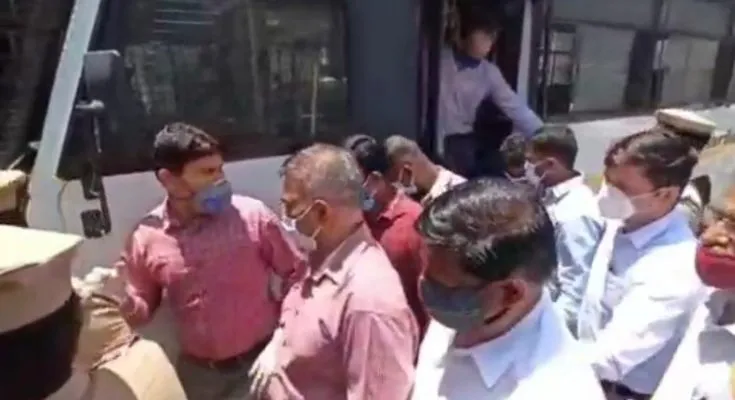
The Sathankulam case, which has drawn national attention, revolved around the tragic custodial deaths of Jayaraj and Bennix in June 2020. Prior to this judgement, there was a prevailing expectation that the police would evade accountability, a sentiment fueled by the long duration of the trial and the historical context of police impunity in India.
However, on March 23, 2026, a decisive moment arrived when the First Additional District and Sessions Court in Madurai found all nine police officers guilty of murder and other offences. This verdict marked a significant shift in the narrative surrounding police conduct, particularly in cases involving custodial violence. The court’s ruling came after nearly six years of legal proceedings, during which over 100 witnesses were examined.
The immediate impact of the judgement is profound. The guilty verdict against the officers, including Inspector S. Sridhar and Sub-Inspectors P. Raghu Ganesh and K. Balakrishnan, has reignited discussions on police accountability in India. The sentencing for these officers is scheduled for March 30, 2026, leaving many to ponder the implications of this case for future law enforcement practices.
Judge G Muthukumaran’s statement, “The injuries inflicted on Jayaraj and Bennix were unnatural, which ultimately caused their death,” underscores the court’s firm stance against the narrative that the injuries were self-inflicted. This judgement not only serves as a legal precedent but also as a societal wake-up call regarding the treatment of individuals in police custody.
The case initially sparked widespread protests and condemnation of police brutality, particularly during the COVID-19 pandemic lockdown when the incident occurred. It prompted the Madurai bench of the Madras High Court to take suo motu cognizance and direct a judicial inquiry, further emphasizing the need for systemic reform.
Moreover, the investigation’s transfer to the Central Bureau of Investigation (CBI) at the request of the Director General of Police highlighted the seriousness of the allegations against the Sathankulam police. The framing of charges under multiple sections of the Indian Penal Code, including murder, reflects the gravity of the situation.
As the nation awaits the sentencing, the case serves as a critical reminder of the ongoing struggle for justice in instances of custodial violence. The quote from the High Court, “Justice delayed is justice denied and justice hurried is justice buried,” resonates deeply in this context, emphasizing the importance of timely and fair judicial processes.
The Sathankulam case judgement is not merely an isolated incident; it is part of a broader discourse on human rights and police accountability in India. The outcome of this case could potentially influence future cases and the public’s trust in the justice system.
In summary, the guilty verdict against the nine police officers involved in the Sathankulam case marks a pivotal moment in the fight against custodial violence in India, highlighting the urgent need for reform and accountability within law enforcement agencies.