Shoaib Akhtar Criticizes India’s Cricket Dominance
Following India’s resounding victory over New Zealand in the ICC Men’s T20 World Cup 2026 final, former Pakistani cricketer Shoaib Akhtar has publicly criticized India’s cricketing dominance, claiming it has “ruined cricket entirely.” India won the final by a significant margin of 96 runs, marking a historic achievement as they became the first team to defend the Men’s T20 World Cup title and the first to win three T20 World Cups.
Akhtar’s comments come in the wake of India’s impressive performance throughout the tournament, which culminated in lifting the T20 World Cup trophy on home soil for the first time. The victory has sparked discussions about the implications of India’s cricketing success on the global stage, particularly in relation to the performance and structure of cricket in Pakistan.
In his critique, Akhtar likened India’s dominance to that of a “rich kid” who invites less privileged players to join in a game, suggesting that India’s overwhelming success has created an imbalance in the sport. He stated, “It’s like when there’s one rich kid in a neighbourhood who calls all the poor kids and says, ‘Come, let’s play cricket.’” This analogy highlights his concern that India’s cricketing prowess may overshadow the contributions and aspirations of other nations.
Despite his criticisms, Akhtar acknowledged the contributions of India’s cricketing infrastructure and the support provided by coach Gautam Gambhir. He praised Gambhir for his role in nurturing players during challenging times, emphasizing that the success of the Indian team is also a result of a well-structured system and merit-based policies. Akhtar noted, “Their policy, system and merit have won,” pointing to the investments made in grassroots development and cricketing facilities in India.
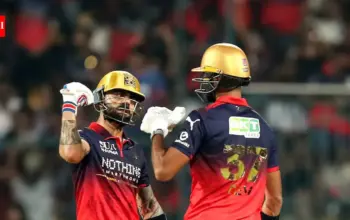
Virat Kohli, who recently scored his 51st ODI century, has been a central figure in India’s cricketing narrative. Akhtar referred to Kohli as a “modern-day great,” recognizing his significant contributions to the team’s success. Kohli’s performance, along with that of his teammates, has been instrumental in establishing India as a dominant force in international cricket.
As discussions continue regarding the future of cricket and the competitive landscape, Akhtar’s remarks reflect a broader concern among former cricketers about the need for other nations, particularly Pakistan, to enhance their cricketing structure. He emphasized the importance of learning from India’s model to foster a more competitive environment in the sport.
Looking ahead, the cricketing community is left to ponder the implications of India’s continued success and the potential responses from other cricketing nations. While Akhtar’s criticisms have sparked debate, the future of cricket remains uncertain as teams strive to catch up with India’s formidable presence in the sport.