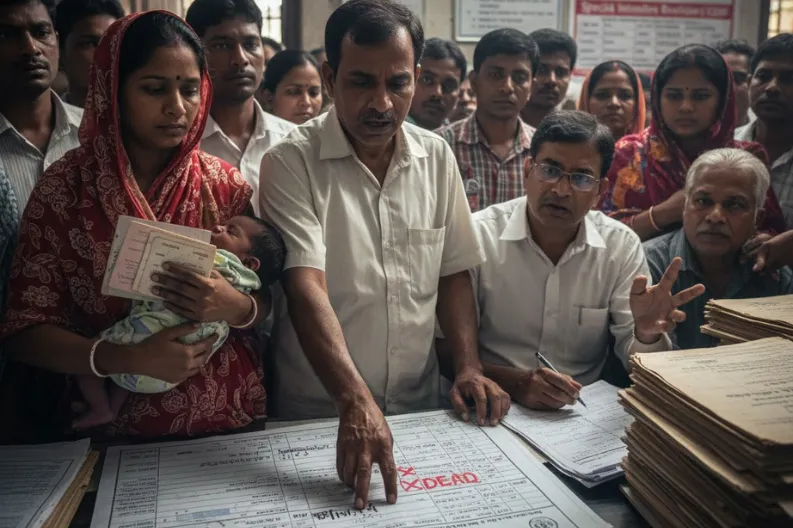
Before the recent developments surrounding the supplementary voter list 2026, West Bengal’s electoral landscape was marred by uncertainty and a backlog of pending voter records. The earlier draft roll had included a staggering 7,08,16,630 names, but the final electoral roll published on February 28 revealed a significant drop to 7,04,59,284 voters. This discrepancy raised concerns about the integrity and accuracy of the voter registration process.
On March 24, 2026, a decisive moment arrived when the Election Commission of India (ECI) and the West Bengal Chief Electoral Officer (CEO) published the first supplementary voter list. This list addressed the backlog by settling 27 lakh pending voter records, with approximately 2 lakh names processed daily. This rapid resolution of pending cases was a crucial step towards restoring public confidence in the electoral process.
The impact of this development has been profound. With 29 lakh adjudications completed out of 60 lakh cases under judicial review, the ECI has taken significant strides to ensure that voters can appeal exclusions from the supplementary list through designated tribunals, as noted by Manoj Kumar Agarwal.
Moreover, the removal of 73 Returning Officers by the ECI underscores a commitment to accountability and transparency in the electoral process. This action, along with the announcement of the supplementary list, reflects a broader effort to clean up the voter registration system in West Bengal.
As the supplementary list is finalized, it will be made available in hard copy at the offices of district electoral officers (DEOs), further enhancing accessibility for voters. The centralised processing of the list, as highlighted by Agarwal, is being conducted in the office of the apex poll body in Delhi, ensuring that the process is managed efficiently.
The SIR exercise in Bengal, announced on October 27 of the previous year, has proven to be a pivotal initiative in addressing the electoral challenges faced by the state. The strict enforcement of the model code of conduct across all assembly constituencies adds another layer of integrity to the electoral process.
In summary, the publication of the supplementary voter list 2026 marks a significant shift in West Bengal’s electoral landscape, addressing long-standing issues and setting a precedent for future elections. As the state moves forward, the focus will remain on ensuring that every eligible voter has a voice in the democratic process.