Prior Expectations for TCS
Before the recent downturn, Tata Consultancy Services (TCS) was regarded as a robust player in the Computers – Software & Consulting sector, boasting a market capitalization of Rs.8,91,913 crores. Investors had high expectations for the company’s performance, particularly given its impressive average Return on Equity (ROE) of 43.49% and a consistent dividend yield of 4.42%. The stock was perceived as a stable investment, with institutional investors holding 23.25% of its shares, indicating confidence in the company’s long-term prospects.
Decisive Moment and Immediate Changes
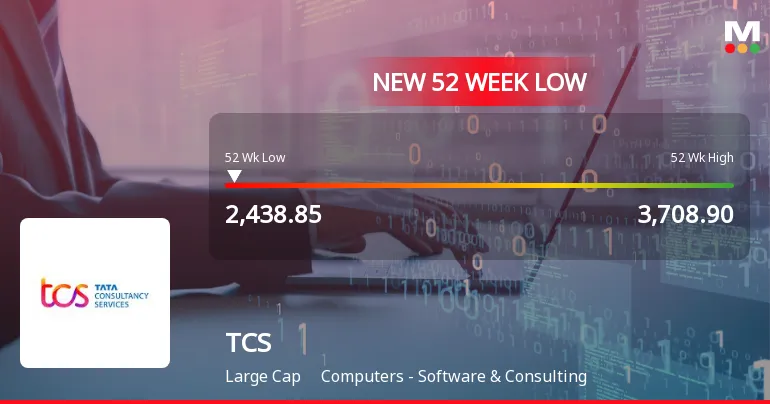
However, on March 12, 2026, TCS’s share price plummeted to Rs.2440, marking its lowest level in the past year. This decline was part of a continuous nine-day downturn, during which the stock lost 7.79% of its value. The broader market also felt the impact, with the Sensex closing down by 269.05 points at 76,100.60, representing a decline of 0.99%. The stock’s performance has raised concerns among investors, particularly as it is currently trading below all key moving averages, indicating a bearish trend.
Direct Effects on TCS and Investors
The immediate effects of this decline have been significant for TCS and its shareholders. The stock has generated a return of -30.08% over the past year, a stark contrast to the expectations held by investors just months prior. This downturn may lead to increased scrutiny from analysts and investors alike, as they reassess the company’s financial health and future prospects. Additionally, the decline in stock price could impact TCS’s ability to attract new investments, as potential investors may be deterred by the negative performance indicators.
Expert Perspectives and Market Context
Experts have pointed to various factors contributing to this shift in TCS’s stock performance. The company’s average debt-to-equity ratio remains at zero, which typically suggests a strong financial position. However, the recent decline in quarterly earnings per share (EPS), which have dropped to Rs.29.44, raises questions about the company’s operational efficiency and profitability. Analysts suggest that while TCS has historically been a strong performer, the current market conditions and internal challenges may require a strategic reevaluation.
Broader Market Implications
The decline in TCS’s stock is not an isolated incident but reflects broader market trends. The Sensex’s decline indicates a general bearish sentiment in the market, which may be influenced by various economic factors, including inflation concerns and geopolitical uncertainties. As TCS is one of the largest companies in its sector, its performance is often viewed as a bellwether for the technology and consulting industries. The current situation may prompt other companies in the sector to reassess their strategies and financial forecasts.
Looking Ahead
As TCS navigates this challenging period, the company’s management will need to address the factors contributing to the stock’s decline. Investors will be closely monitoring any strategic initiatives or changes in operational focus that may arise in response to the current market conditions. The company’s ability to recover from this downturn will depend on its responsiveness to both internal challenges and external market pressures.
While TCS has historically been a strong performer in the technology sector, the recent decline in its stock price highlights the volatility and unpredictability of the market. As the company works to regain investor confidence, the coming months will be crucial in determining its trajectory in an increasingly competitive landscape. Details remain unconfirmed.