Introduction
The Magnetic North Pole is a critical reference point for navigation and geography, influencing compasses and global positioning systems. As Earth’s magnetic field continues to shift, understanding the Magnetic North Pole’s movements becomes increasingly vital for various applications, including shipping, aviation, and even satellite technology.
The Current State of the Magnetic North Pole
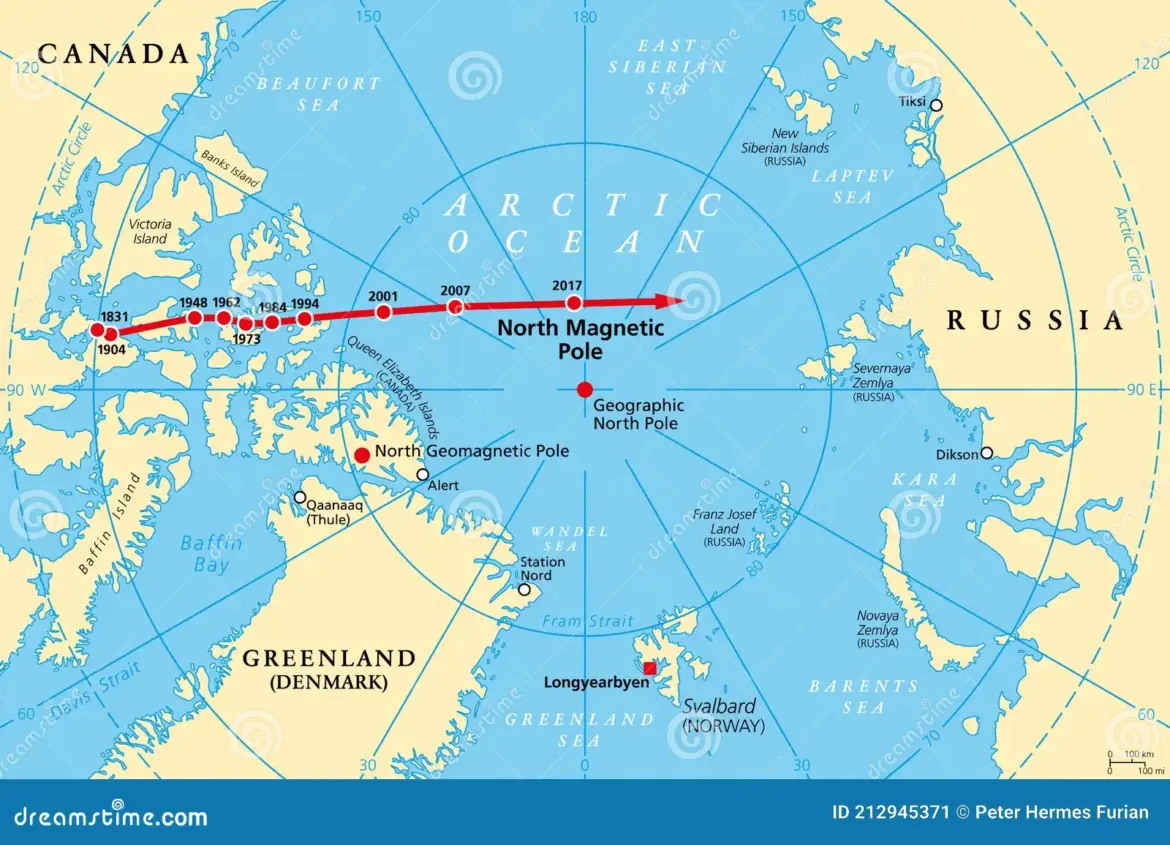
Recent studies have revealed unprecedented shifts in the Magnetic North Pole’s location. Historically located in the Canadian Arctic, the pole is now moving towards Russia at an alarming pace of 55 km per year. This change has been attributed to fluctuations within Earth’s molten outer core, which generates the planet’s magnetic field.
The National Centers for Environmental Information (NCEI) and the British Geological Survey have collaborated on several global surveys over the past few years to better understand these movements. Their findings indicate that the Magnetic North Pole is not only moving but also undergoing changes in intensity, which can affect navigation systems reliant on magnetic orientation.
Implications of the Pole’s Movement
The shifting Magnetic North Pole presents several potential challenges. Pilots and navigators must regularly update their navigational charts, impacting both commercial and military operations. Additionally, geomagnetic storms caused by solar activity can exacerbate the effects of the shifting pole, leading to disruptions in communication and satellite operations.
Researchers are also concerned about the implications for wildlife. Many animal species, including migratory birds and sea turtles, rely on Earth’s magnetic field for navigation. Changes in the magnetic landscape may disrupt these patterns, leading to unforeseen consequences for ecosystems.
Conclusion
The Magnetic North Pole, while an abstract concept for many, plays a tangible role in our modern lives. As its location continues to change, staying informed about these movements and understanding their implications is crucial. Continued research will be necessary to mitigate the challenges posed by the shifting pole and to adapt our navigation systems accordingly. Individuals and industries reliant on accurate navigation must remain vigilant and proactive in addressing this evolving phenomenon.