Introduction
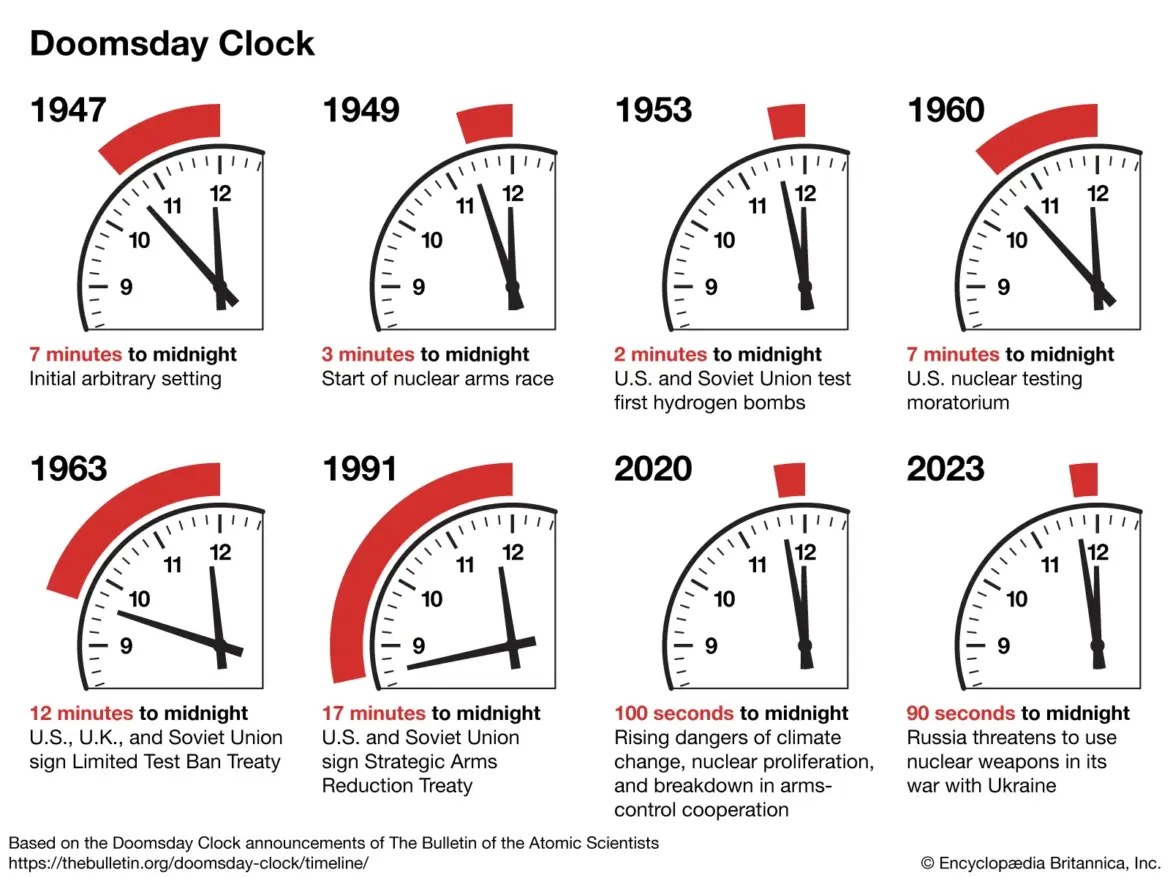
The Doomsday Clock is a symbolic representation of how close humanity is to catastrophic destruction, a concept created by the Bulletin of the Atomic Scientists in 1947. This clock serves as a warning system for the world’s potential perils, primarily focusing on nuclear threats and climate change. As geopolitical tensions rise and ecological issues escalate, the clock’s time symbolises the urgency of the global situation, making it a critical topic of discussion in recent years.
What Is the Doomsday Clock?
Initially set at 7 minutes to midnight in 1947, the clock has been adjusted numerous times in response to global events. Each minute change reflects the assessment of scientists and experts regarding existential risks, including nuclear warfare, climate change, and emerging technologies. The closer the hands of the clock are to midnight, the closer humanity is perceived to be to a global catastrophe.
Recent Adjustments and Events
In January 2023, the Doomsday Clock was set to 90 seconds to midnight, the closest it has ever been. This decision was significantly influenced by the ongoing war in Ukraine, rising nuclear tensions, and the worsening climate crisis. The Bulletin of the Atomic Scientists noted that these factors combined indicate a heightened state of urgency for global leaders to act effectively against these intertwined threats.
Moreover, the aftermath of the COVID-19 pandemic has highlighted vulnerabilities in public health and governance, further justifying the clock’s update. The scientific community emphasises that increased global cooperation and immediate measures are essential to mitigate these dangers.
Significance for Society
The Doomsday Clock serves as an important reminder of the fragile nature of human society and the significant decisions that can tilt the balance towards destruction or survival. By raising awareness of the threats we face, it aims to motivate individuals and governments to take meaningful action to address these global challenges.
Conclusion
The Doomsday Clock remains a powerful visual within public discourse on existential risks. As we continue to face complex global challenges, understanding the implications of the clock’s position fosters a collective responsibility to pursue solutions that can safeguard our future. If present trends continue, the need for urgent action cannot be overstated. Monitoring the imminence of global threats is crucial; thus, the Doomsday Clock will undoubtedly remain relevant in discussions about humanity’s fate.