The recent World Cup campaign has reportedly overshadowed previous concerns regarding ticket prices, travel distances between venues, and the perceived decrease in quality due to the tournament’s expansion to 48 teams. Despite these discussions, FIFA is expected to declare the tournament a success, leading to considerations for an even larger future event.
According to economic thinking, if a 48-team World Cup is successful, then a 64-team tournament would be even more so. This idea is based on the assumption that football fans will continue to support the event regardless of price or circumstances. While a 64-team World Cup is not yet a formal proposal, discussions around it have already begun.
Expanding the World Cup format
Concerns about the dilution of tournament quality by including more teams are often considered secondary to audience size and revenue generation. From an organisational perspective, a 64-team World Cup, or even one with 128 teams, is seen as manageable. This is partly due to the established practice of multi-country hosting, a concept that elite sports, especially football, have adopted and developed over time.
The World Cup has a history of expansion, starting with 13 teams, then stabilising at 16 participants until 1978. It expanded to 24 teams from 1982 to 1994, then to 32 teams from 1998 to 2022, and most recently to 48 teams.
A hypothetical 128-team tournament could involve dividing teams into eight groups of 16 teams, effectively creating eight mini-World Cups, each hosted by a different country. Each mini-tournament would feature a group stage followed by knockout rounds up to the semi-finals. The 16 teams that advance from these eight host nations would then proceed to a ninth host country for a final phase.
This final phase would consist of four groups of four teams, followed by semi-finals and a final, ultimately determining a champion, runner-up, third-place, and fourth-place finisher. Such a tournament could potentially last around 41 days, which is only slightly longer than the 2026 World Cup’s 39 days. Qualification stages would still be necessary for 120 teams, with the first-phase host nations automatically qualifying.
Morocco’s pivotal role in 2030 bid
Luis Rubiales, former president of the Royal Spanish Football Federation (RFEF), has emphasised Morocco’s critical contribution to the successful joint bid for the 2030 FIFA World Cup. He refuted suggestions that Morocco was merely a secondary partner in the bid.
During a phone interview, Rubiales stated that the bid’s success would have been impossible without Morocco. He explained that a joint bid from Spain and Portugal alone would not have garnered sufficient support within FIFA to win the hosting rights. Morocco was deemed essential because a bid without them would have faced strong competition from Saudi Arabia, which would have had the backing of the Arab world and much of Africa.
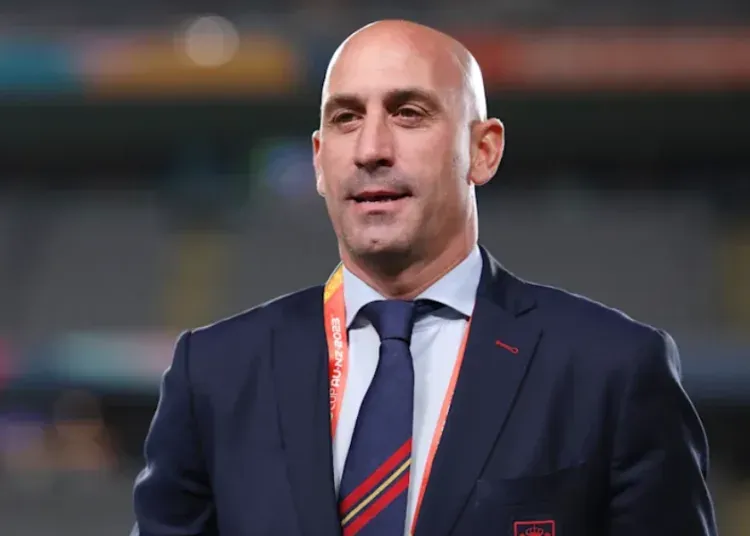
Rubiales’s comments challenge the idea that Morocco joined the project only after Spain and Portugal encountered difficulties in strengthening their candidacy. His remarks suggest that Morocco’s increasing influence in international football played a significant role in transforming the Spain-Portugal bid into the successful Spain-Portugal-Morocco project that will host the 2030 FIFA World Cup.
Morocco’s growing influence is attributed to its expanded football infrastructure and strengthened diplomatic ties within FIFA and CAF over the past decade, establishing itself as a major host for international tournaments.
Financial and logistical considerations
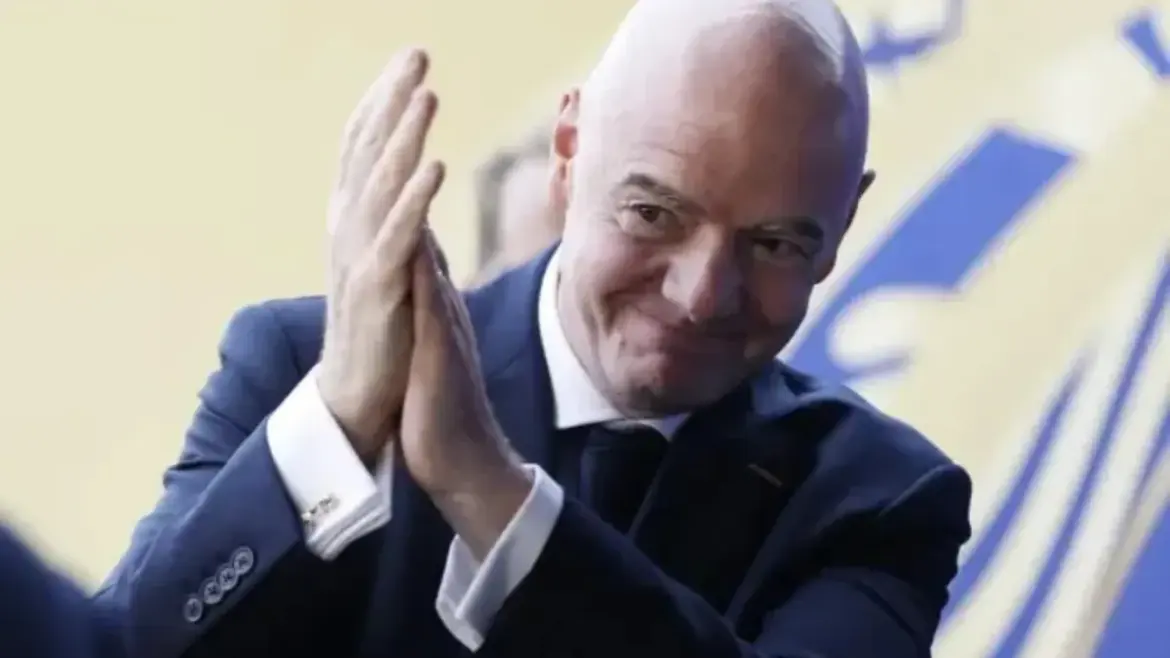
FIFA President Gianni Infantino has acknowledged the possibility of further expansion beyond the 48-team format, with a 64-team World Cup being among the ideas under consideration. Such an expansion would necessitate more stadiums, hotels, transport, and potentially a longer tournament duration.
The financial implications are also significant. Making qualification easier for more nations could reduce the commercial value of qualifying competitions while increasing the importance of FIFA’s flagship event. This could lead to regional confederations becoming more reliant on FIFA’s distributions, shifting more financial influence towards the global governing body.
UEFA President Aleksander Ceferin has expressed opposition to further expansion, questioning where it might end and its impact on qualifiers. The 2026 tournament, hosted by Canada, Mexico, and the United States, is the first to move away from the 32-team format since 1998, expanding to 48 nations and 104 matches over more than five weeks. A 64-team World Cup, retaining the same basic structure, would involve 128 matches, which is 24 more than in 2026 and double the total under the old 32-team format.
This could add approximately another week to a tournament already lasting over five weeks, unless the schedule is compressed or more games are played simultaneously. The plans for Spain, Portugal, and Morocco to host most of the 2030 finals, with Uruguay, Argentina, and Paraguay each hosting a single opening-round match, highlight the complexity of accommodating multiple teams across several nations.
An expanded World Cup would also intensify player welfare concerns due to an increased workload and place greater strain on the already congested international calendar and domestic leagues. The French Football Federation had anticipated spending 24.5 million euros at this year’s World Cup, with the federation president indicating that reaching at least the semi-finals would be necessary to avoid financial losses.
If a 48-team tournament already stretches the finances of participating federations, a longer 64-team event could further increase these costs. The debate over competitive balance, tournament length, and fan costs will likely intensify with any further expansion.
Read Also
- Argentina players could face FIFA bans after World Cup final chaos against Spain
- Sanju Samson reflects on Rohit Sharma's advice during T20 World Cup 2026
- Paredes Breaks Silence on World Cup Final Chaos Amid FIFA Investigation
- PV Sindhu credits Virat Kohli's advice for career revival and Japan Open victory
Source: marca.com