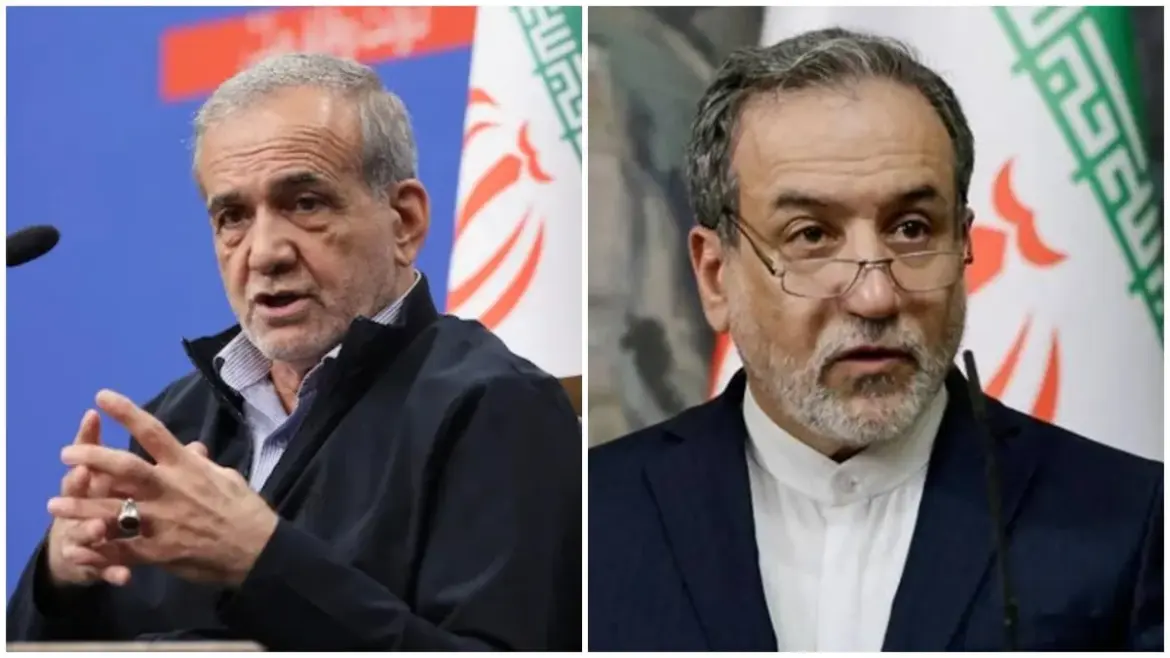
Masoud Pezeshkian, Iran’s President, has reportedly stated that he will dismiss Foreign Minister Abbas Araghchi if his conduct continues, highlighting the growing tensions within Iran’s leadership regarding his handling of negotiations with the United States.
Documents show that President Pezeshkian and Parliament Speaker Mohammad Bagher Ghalibaf are actively seeking Araghchi’s ouster amid accusations that he has aligned too closely with Revolutionary Guard Commander Ahmad Vahidi. Sources say that Pezeshkian believes Araghchi has acted more like an aide to Vahidi than a cabinet minister, which has led to frustration at the highest levels of government.
The situation escalated when Ghalibaf resigned as head of the negotiating team after being reprimanded for including nuclear discussions in talks with the United States. This incident reflects deeper divisions within Iran’s leadership regarding the approach to negotiations, particularly with the U.S., which have been fraught with tension and conflicting agendas.
On April 24, Araghchi traveled alone to Islamabad to deliver Tehran’s proposal to Pakistani officials without informing either Pezeshkian or Ghalibaf, further exacerbating the internal conflict. Following his return, the U.S. president rejected Tehran’s proposal delivered by Araghchi, illustrating the challenges faced by Iranian diplomats amidst a backdrop of regional instability.
A group of lawmakers aligned with hardline politician Saeed Jalili have also refused to support the negotiating team, indicating a significant rift in Iranian politics regarding foreign policy. The Revolutionary Guards are reportedly consolidating control over key managerial positions during this critical period.
In contrast, Araghchi has asserted that cooperation between Iran and Russia continues to expand amid regional uncertainty, suggesting that despite internal strife, there remains a focus on maintaining international alliances. He stated that the United States failed to achieve its objectives in the recent conflict with Iran, reflecting a broader narrative among Iranian officials regarding their stance in ongoing geopolitical tensions.
The meeting between Russian Foreign Minister Sergey Lavrov and Iranian officials was described as constructive and practical, indicating that while internal disputes may hinder some diplomatic efforts, there is still potential for collaboration on issues impacting regional stability.