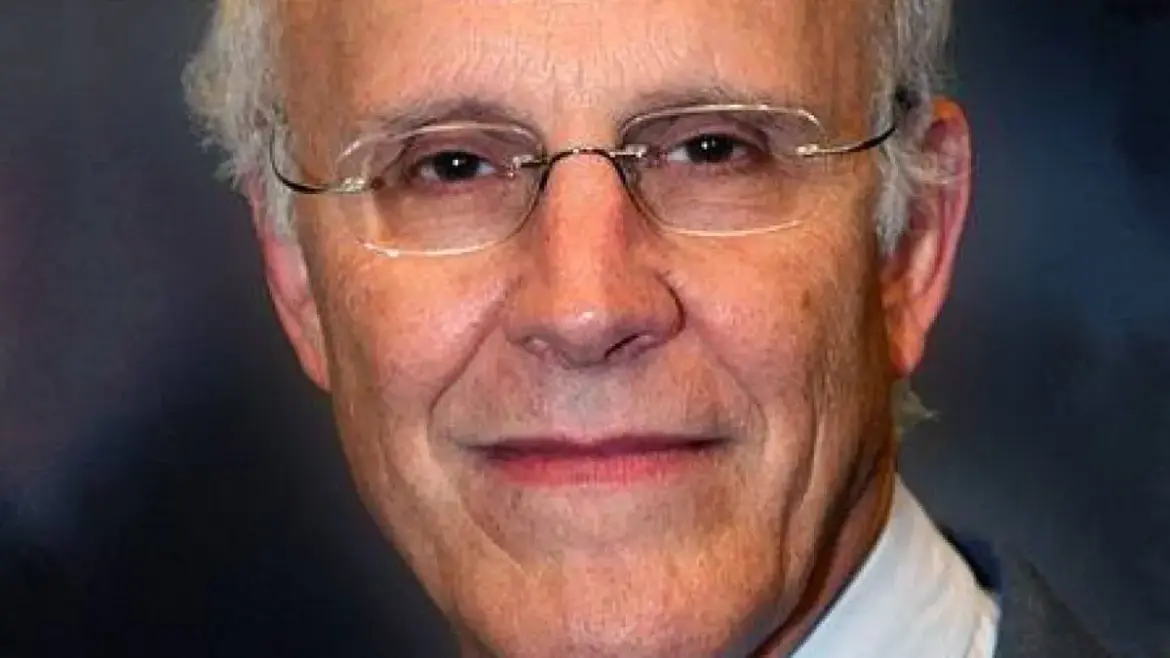
David Gross, the Nobel Prize-winning physicist known for his groundbreaking work in the field of particle physics, has recently raised alarming concerns regarding the future of humanity, suggesting that there is a significant risk that we may not survive the next 50 years due to the increasing threat of nuclear conflict.
Gross, who received the Nobel Prize in Physics in 2004 for his discovery of asymptotic freedom—a phenomenon where the force between quarks diminishes as they come closer together—has further been recognized with a $3 million Special Breakthrough Prize in Fundamental Physics. This latest accolade underscores not only his influential contributions to theoretical physics but also emphasizes the gravity of his recent assertions regarding global security.
According to Gross, who has estimated a 2% annual chance of nuclear war, this statistic translates into an expected lifetime for humanity of approximately 35 years. “The chances of you living 50 years are very small,” he stated, reflecting a stark outlook on current geopolitical tensions. His assessment suggests that humanity is at a precarious juncture, with nine nations currently possessing nuclear weapons complicating the potential for conflict.
Furthermore, Gross argues that the risk of nuclear war has escalated in recent years—”We’re entering an incredible arms race,” he noted. This statement highlights not only his concerns about current military developments but also points to a broader context where international diplomacy appears increasingly strained. The historical backdrop of nuclear proliferation has created an environment rife with uncertainty; as nations continue to modernize their arsenals, the specter of catastrophic conflict looms larger.
While Gross’s scientific achievements have significantly contributed to our understanding of fundamental forces—completing what is known as the Standard Model of particle physics—his warnings serve as a reminder that scientific advancements must be accompanied by responsible governance and international cooperation. The duality of his role as both a physicist and a concerned global citizen raises profound questions about how scientific communities can engage with pressing societal issues.
As observers reflect on Gross’s statements, it becomes clear that there is an urgent need for dialogues surrounding disarmament and peacekeeping initiatives. The intersection of science and policy is critical; without proactive measures, the risks outlined by Gross could become more than mere projections—they could manifest into reality.
Details remain unconfirmed regarding future actions or responses from global leaders in light of these warnings. However, what remains evident is that David Gross’s insights into both fundamental physics and existential threats present an opportunity for reflection and action among policymakers and scientists alike.