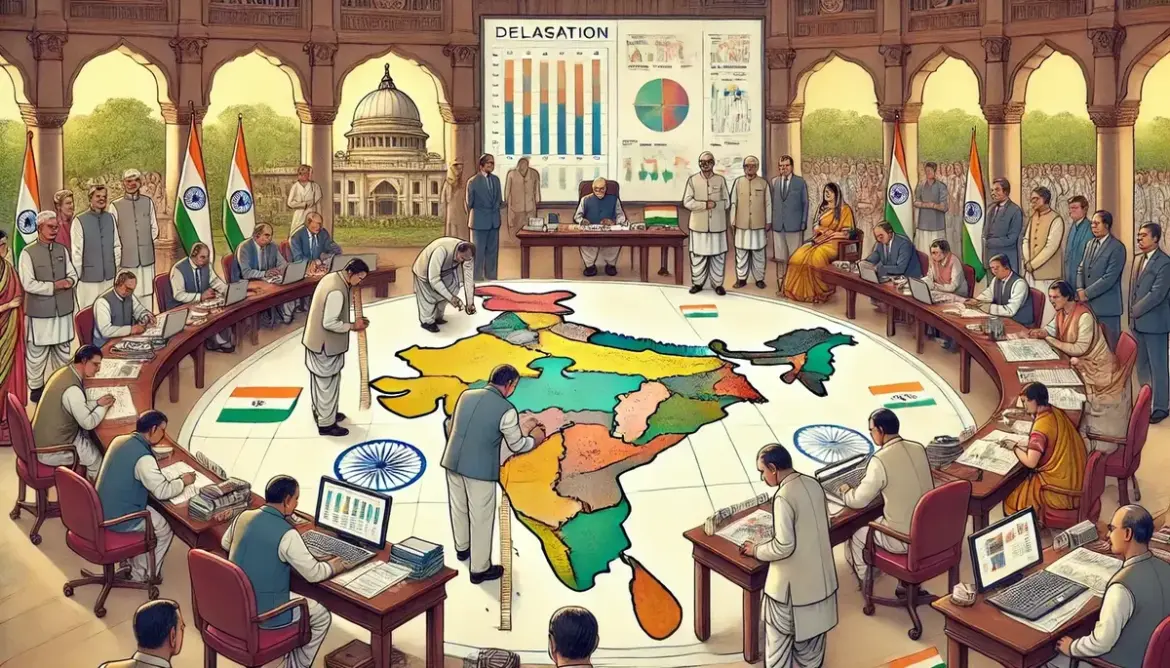
As India approaches a pivotal moment in its political landscape, the Union Government has announced plans to introduce a new delimitation Bill that could significantly alter the structure of the Lok Sabha. This proposal comes just before the Special Session of Parliament scheduled for April 16 and 17, 2026, where the Bill will be discussed. The timing is crucial as it sets the stage for a potential transformation in how parliamentary representation is defined and executed in the country.
On April 14, 2026, the government revealed its intention to increase the strength of the Lok Sabha from the current 543 members to a proposed 850 members. This ambitious plan aims to amend Article 81 of the Constitution, allowing for a maximum of 815 members from the states and 35 from Union Territories. The proposed changes are significant, especially considering that the current composition of the Lok Sabha is based on the 1971 Census, with constituency boundaries frozen since the 84th Amendment Act of 2001 until the first census after 2026.
The proposed amendment seeks to delete the stipulation that delimitation must follow the post-2026 Census, which has raised eyebrows among political analysts and opposition parties. Critics argue that this move could undermine the democratic process by allowing the government to manipulate constituency boundaries without the latest population data. The last published census was in 2011, and the next is expected to conclude in 2027, making the timing of this proposal particularly contentious.
In addition to expanding the number of seats, the Bill also includes a provision for 33% reservation for women in the Lok Sabha and State Assemblies. This aspect of the proposal has garnered support from various women’s rights groups and advocates for gender equality in politics. The inclusion of women’s reservation is seen as a significant step towards increasing female representation in a historically male-dominated political arena.
Furthermore, the Bill empowers the Central Government to constitute a Delimitation Commission, which will be chaired by a person who is or has been a Judge of the Supreme Court. This Commission will have the authority to issue orders that, once published in the Gazette of India, will have the force of law and cannot be challenged in any court. This provision raises questions about the checks and balances in the delimitation process and the potential for judicial oversight.
The implications of these proposed changes are profound. If passed, the new delimitation Bill could reshape the political landscape of India, affecting not only the number of representatives but also the distribution of power among various regions and communities. The current allocation of seats is based on population figures from the 1971 census, while the existing division of territorial constituencies relies on the 2001 census. This discrepancy highlights the urgent need for a recalibration of representation in light of demographic changes over the past decades.
As the political discourse surrounding this Bill intensifies, it is essential for stakeholders, including political parties, civil society organizations, and the general public, to engage in meaningful discussions about the potential consequences of such a significant overhaul of the electoral framework. The outcome of the Special Session could set a precedent for future electoral reforms and the nature of democratic representation in India.
In summary, the proposed delimitation Bill represents a critical juncture in India’s political evolution. With the potential to expand the Lok Sabha and introduce women’s reservation, it could redefine the parameters of representation in the world’s largest democracy. However, the implications of bypassing the upcoming census for delimitation raise concerns about fairness and accountability in the electoral process.