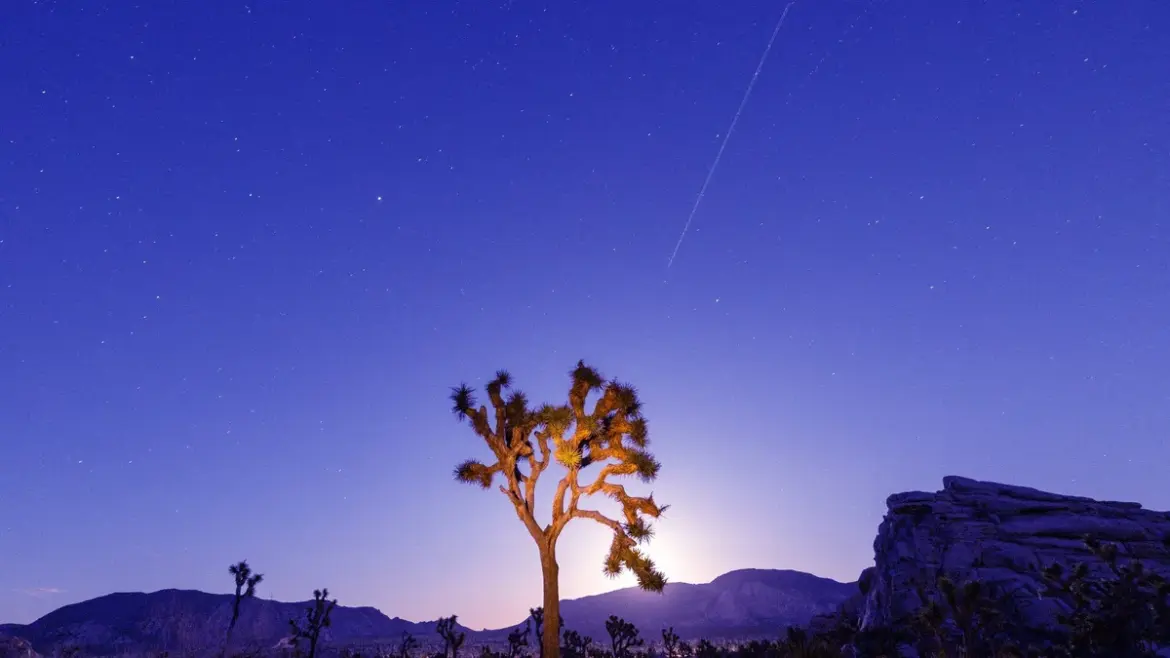
The Lyrid meteor shower, which peaks from April 21 to April 22, is expected to provide a significant celestial display for observers in the Northern Hemisphere. This annual event allows enthusiasts to witness up to 15–20 meteors per hour under clear conditions, particularly in regions such as the UK.
According to documents and historical accounts, the Lyrids have been observed for more than 2,700 years, making them one of the oldest recorded meteor showers. The meteors are believed to originate from Comet C/1861 G1 Thatcher and appear near the constellation Lyra—close to its brightest star, Vega.
Observers should note that the Lyrids are known for their speed and brightness; many of these meteors leave glowing trails that can be seen streaking across the night sky. The best viewing times occur after midnight when the radiant rises higher in the sky, providing optimal conditions for sighting these celestial phenomena.
Historically, records indicate that observations of the Lyrids date back to at least 687 BC, underscoring their significance in both astronomy and cultural history. The meteors are active from April 16 to April 25, with peak activity occurring during this brief window.
While some estimates suggest that up to 100 meteors could be visible per hour during periods of heightened activity, averages tend to hover around 18 meteors per hour. Observers are advised to allow approximately 30 minutes for their eyes to adjust to darkness for the best experience.
As anticipation builds for this year’s event, details remain unconfirmed regarding specific viewing conditions or potential fluctuations in meteor activity. However, those interested should prepare for what promises to be a captivating display in the night sky this month.