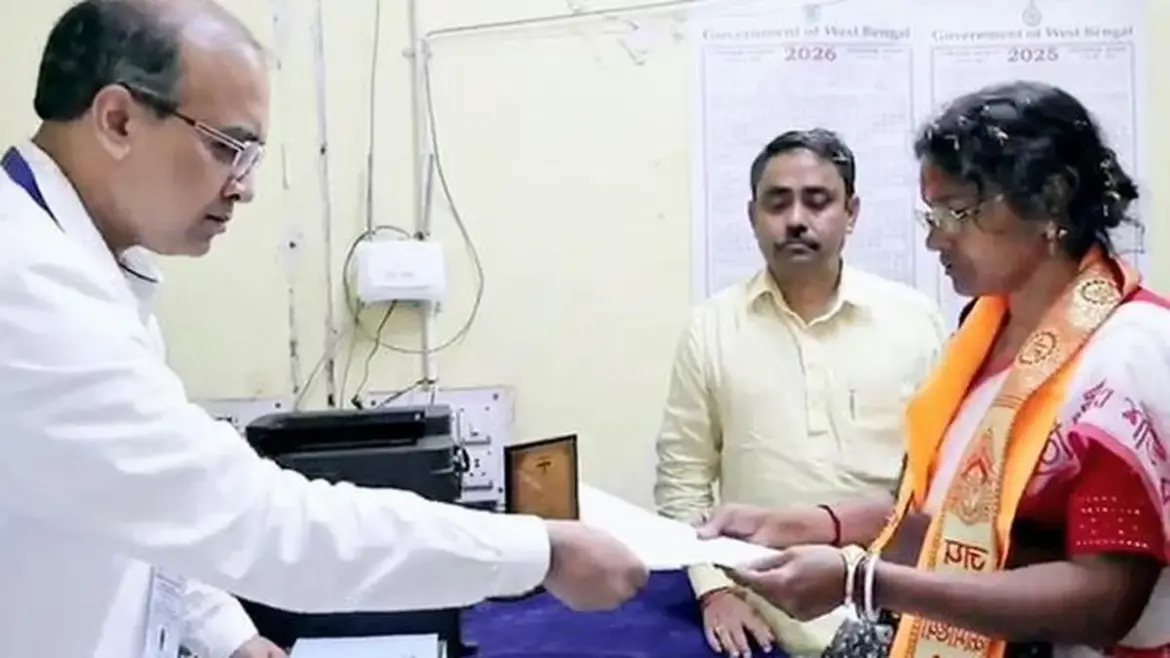
“This victory is the victory of the people of Panihati, of the entire Bengal,” declared Ratna Debnath after her significant win in the Panihati Assembly constituency as a BJP candidate on May 4, 2026.
Debnath’s journey into politics emerged from personal tragedy; she entered the scene following the brutal rape and murder of her daughter in August 2024, an event that ignited widespread outrage and discussions on women’s safety across West Bengal. Her campaign focused heavily on accountability in governance and addressing women’s safety issues, resonating with many voters.
The election results reflect a substantial political shift in West Bengal, where the BJP secured a historic victory by winning 202 seats, surpassing the two-thirds mark. In her constituency, Debnath garnered 87,977 votes, defeating Tirthankar Ghosh from TMC by a margin of 28,836 votes; Ghosh received 59,141 votes, while Kalatan Dasgupta from CPI(M) trailed with 24,032 votes.
This remarkable electoral debut not only underscores Debnath’s personal resilience but also highlights a growing trend of women stepping into political roles amid pressing social issues. Her candidacy represents more than just personal vindication; it symbolizes a broader demand for change within West Bengal.
In her acceptance speech, Debnath dedicated her victory to Prime Minister Modi, stating, “I could not have done this alone,” indicating her acknowledgment of the support from the BJP and its leadership.
The implications of this election extend beyond individual victories; they suggest a reconfiguration of political alliances and priorities within West Bengal. As issues surrounding women’s safety become increasingly central to political discourse, candidates like Debnath may pave the way for future developments in governance and societal norms.