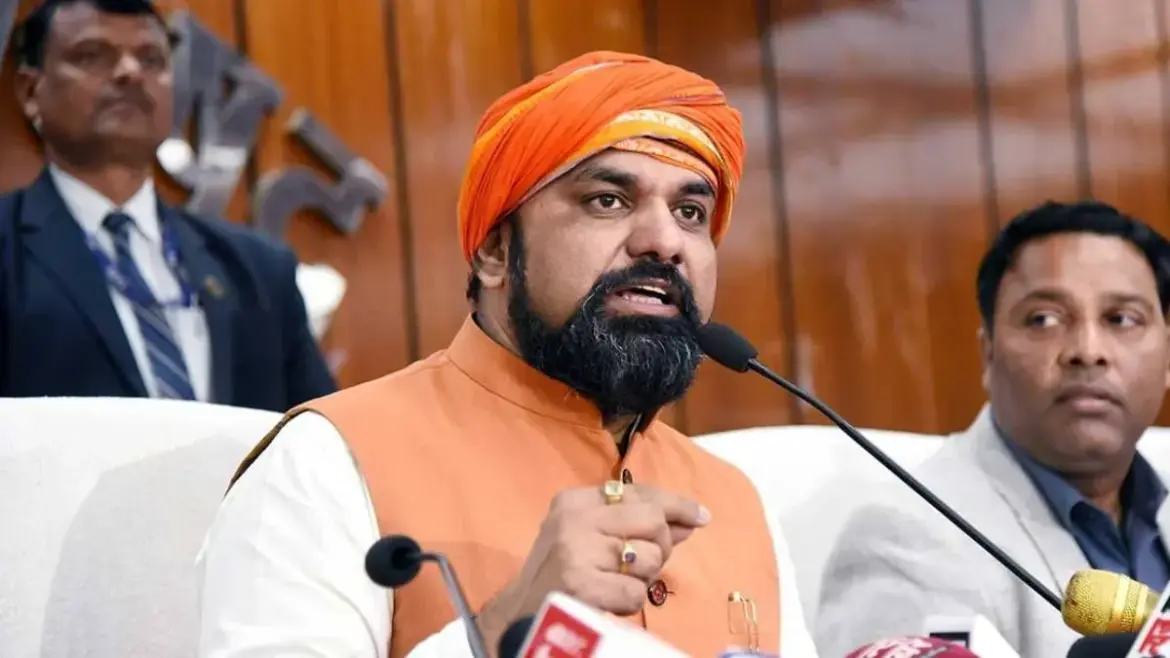
What does the resignation of Nitish Kumar mean for the political landscape of Bihar, and how does it pave the way for Samrat Chaudhary? With Kumar stepping down after a remarkable two-decade tenure, Chaudhary is set to become the first Chief Minister from the Bharatiya Janata Party (BJP) in the state, marking a significant shift in Bihar’s political dynamics.
Chaudhary’s ascension to this pivotal role comes after a proposal by Deputy Chief Minister Vijay Sinha, which was subsequently endorsed by Union Minister Shivraj Singh Chouhan. This endorsement is not merely ceremonial; it reflects the BJP’s strategic positioning in Bihar, especially after winning 74 seats in the 2020 assembly elections under Chaudhary’s guidance. His experience in state politics spans over three decades, having previously served as the Deputy Chief Minister and the Minister of Agriculture in the RJD-led government in 1999.
Born on November 16, 1968, Chaudhary belongs to the Koeri-Kushwaha caste, which constitutes approximately 4.2% of Bihar’s population. This demographic detail is crucial as it highlights the BJP’s efforts to consolidate support among various caste groups in Bihar, a state where caste dynamics play a significant role in electoral politics. Chaudhary joined the BJP in 2018 and quickly rose through the ranks, becoming the state president in 2023, a position that has undoubtedly prepared him for this new challenge.
In his first public statements following his appointment, Chaudhary expressed profound gratitude to the BJP for entrusting him with this responsibility. “This is not merely a position for me, but a sacred opportunity to serve the people of Bihar, to fulfil their trust and dreams,” he stated. His commitment to the state is further underscored by his pledge to “live up to the expectations of one and all with complete dedication, commitment, and integrity.” Such declarations resonate well with the electorate, particularly in a state that has faced numerous challenges in governance and development.
Chaudhary’s leadership comes at a time when Bihar is grappling with various socio-economic issues, including unemployment, education, and infrastructure development. His previous role as the Minister of Agriculture may provide him with insights into addressing agricultural challenges, which are critical in a state where a significant portion of the population relies on farming for their livelihood.
The oath-taking ceremony for Samrat Chaudhary is scheduled for April 15, 2026, and it will be a moment of great significance not just for him but for the BJP as well. This event symbolizes a new chapter in Bihar’s political narrative, one that could redefine the state’s governance and its relationship with the central government.
As Chaudhary prepares to take office, the political community is keenly observing how he will navigate the complexities of Bihar’s political landscape. His ability to unite various factions within the BJP and engage with opposition parties will be crucial in determining his success as Chief Minister. While many are optimistic about his leadership, uncertainties remain about how effectively he can implement policies that resonate with the diverse needs of Bihar’s populace. Details remain unconfirmed regarding his cabinet choices and immediate policy priorities, but the anticipation surrounding his leadership is palpable.