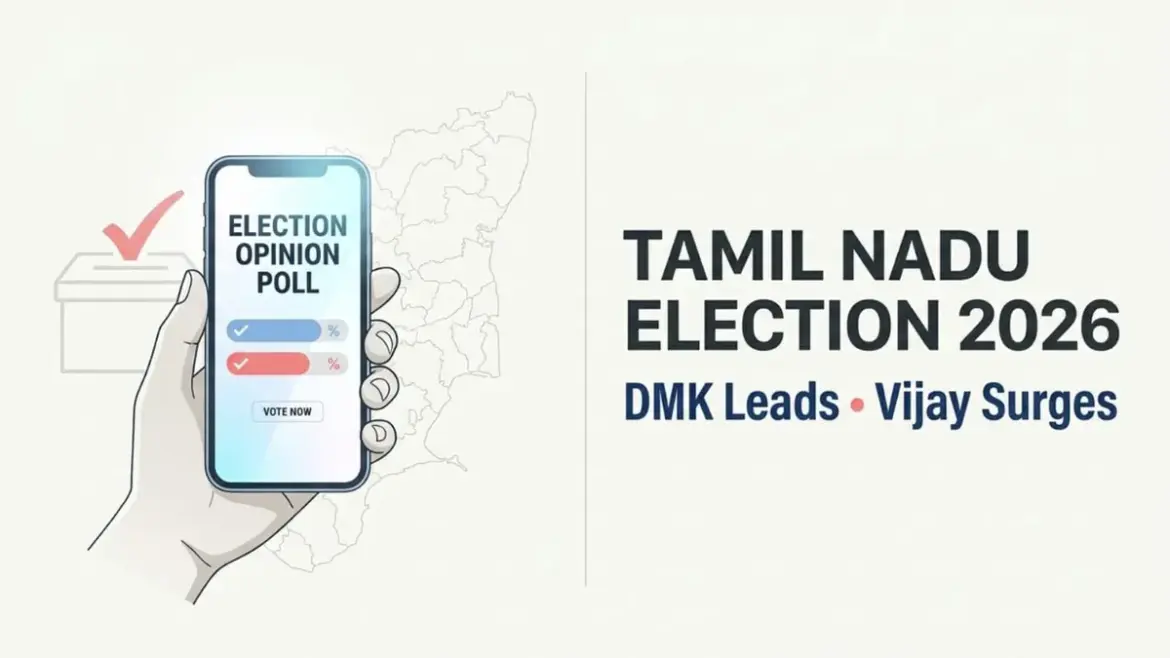
As Tamil Nadu approaches its assembly elections scheduled for April 18, 2026, the political landscape is increasingly characterized by shifting alliances and emerging parties. The Dravida Munnetra Kazhagam (DMK), led by Chief Minister M. K. Stalin, is currently projected to retain power according to recent data from the Vikatan election survey.
The survey, which encompassed responses from approximately 93,600 voters across all 234 constituencies, indicates that the DMK alliance is expected to secure around 121 seats in the upcoming elections. This projection suggests a significant advantage stemming from the party’s welfare-oriented governance model—an aspect that continues to resonate with a substantial portion of the electorate.
However, it is noteworthy that while the DMK appears to maintain a lead, there exists a palpable desire for change among voters; specifically, about 62% of respondents expressed a wish for regime change. This sentiment could reflect a growing dissatisfaction among certain voter segments, despite the DMK’s organizational strength and its capacity for vote consolidation over recent years.
In this evolving scenario, Vijay’s newly established Tamilaga Vettri Kazhagam (TVK) emerges as a noteworthy contender. The entry of TVK has significantly altered electoral dynamics—documents show that it is projected to secure approximately three seats and may capture around 24.71% of the vote share. This marks a notable impact for a relatively new player on the political stage.
The AIADMK alliance, under Edappadi K. Palaniswami’s leadership, is projected to secure about 83 seats, which indicates a potential decline from previous electoral performances. This shift may be attributed to various factors including internal party dynamics and voter sentiment shifting towards alternatives like TVK.
Moreover, with a total voter population in Tamil Nadu estimated at approximately 5.67 crore—including around 12.5 lakh first-time voters—the electorate’s composition is changing. The presence of new voters could play an essential role in determining the outcome of the elections, especially given their potential alignment with emerging parties.
Yet, despite these projections and sentiments expressed by voters, uncertainties loom large over the final outcomes of these elections due to potential last-minute swings and the ongoing influence of established political forces. Details remain unconfirmed as various factors could alter voter behavior closer to election day.
This sequence of events matters significantly for all involved parties as they navigate an increasingly complex electoral landscape where clear majorities can no longer be taken for granted—an evolution that may reshape Tamil Nadu’s political future.